
Always present, so it gets controlled
Cloth, paper, and bedding are unavoidable inside an occupied chamber. Certified operation minimises them, specifies fire-retardant materials, and bans grease, oil, petroleum products, cosmetics, and hairspray.
Now accepting HSA/FSA on eligible orders
Learn moreStandards, engineering, and verification
A hyperbaric chamber is a pressure vessel, so its safety is an engineering property before it is a matter of user care. The recognised risk in hyperbaric medicine is fire, and certified chambers are built and operated to remove the one leg of that problem you can actually remove. The largest published analysis, across 2,334 patients, put adverse events at 0.72% per session, with 17.4% of patients reporting at least one over a full course, most of them minor. Here is what makes those numbers possible, and what to verify before you buy.
The physics
Fire needs fuel, oxygen, and an ignition source together. A hyperbaric chamber raises one of those on purpose and always contains a little of another, which is why the third is controlled so strictly.
A hyperbaric chamber works by raising the pressure around you, typically to two or three times normal atmospheric pressure, so that far more oxygen dissolves into your blood plasma (Mayo Clinic). That enrichment is the therapy. It is also the reason a chamber is treated as a fire-safety environment rather than an ordinary room: materials that smoulder slowly in ordinary air behave very differently when oxygen is concentrated and held under pressure.
The chamber adds a second constraint that shapes every design decision. Because the vessel is sealed and pressurised, a door cannot simply be opened, so rapid evacuation is not available and smoke cannot be vented quickly (University of Iowa Health Care). Hyperbaric safety is therefore built almost entirely around prevention rather than response. That single fact explains why the rules below look strict for a therapy whose adverse events are, statistically, uncommon.
Cloth, paper, and bedding are unavoidable inside an occupied chamber. Certified operation minimises them, specifies fire-retardant materials, and bans grease, oil, petroleum products, cosmetics, and hairspray.
Raising oxygen is the entire point of the therapy, which means this leg of the triangle cannot be removed. It is instead managed by architecture: compress with air, deliver oxygen to the occupant only, and vent continuously.
This is where safety is actually won. No flames, no sparks, no lighters or hand warmers, no unapproved electronics, indirect lighting only, and static controlled through garments and grounding.
New to the therapy itself? Start with how hyperbaric oxygen therapy works, or what a hyperbaric chamber is.
The build
The safest chambers do not rely on the occupant behaving perfectly. They move as much of the problem as possible into the architecture, where it holds regardless of who is inside.
The most consequential design choice is what the chamber is filled with, and there are two established architectures. A traditional clinical monoplace chamber is flooded with 100% oxygen, so the occupant breathes it directly with no mask; the whole vessel becomes the oxygen environment. The alternative pressurises the chamber with air and delivers oxygen only to the occupant, through a hood or mask that exhausts outside the vessel, with the chamber venting continuously to wash out anything that escapes the breathing circuit (University of Iowa Health Care).
Both deliver the same therapy, and the difference is where the oxygen sits. In an air-pressurised design the surrounding environment stays close to ordinary air, so the oxygen leg of the fire triangle is held down by architecture rather than by protocol alone. An oxygen-filled design accepts a fully enriched environment and compensates with absolute exclusion of ignition sources and non-combustible interior specification. Which architecture a chamber uses is a fair question to ask a manufacturer, and the answer should be specific. Our own hard-shell chambers are air-pressurised with BIBS mask delivery; see the monoplace guide for how occupancy and oxygen delivery interact.
Two further systems rarely get explained, and they are worth asking about by name. Pressure-relief and over-pressure valves govern what happens if pressure goes somewhere it should not, and serious builds carry more than one independent path rather than a single point of failure. Oxygen monitoring instrumentation reads the chamber environment during a session, which turns oxygen concentration from an assumption into a measurement. Clinical installations add engineered fire suppression, triggered by an attendant or by automatic detection.
Worth knowing what a specific answer sounds like: our Superhuman L1 carries four independent depressurisation paths (one manual valve, two automatic relief valves, and one emergency relief valve), with an analog gauge that verifies pressure independently of the digital system, and screens that read out oxygen concentration during the session. Whichever chamber you are looking at, that is the shape of answer to hold a manufacturer to.
Materials carry the rest. Certified interiors use fire-retardant specification where possible, lighting is indirect so no filament or fixture sits in the oxygen-enriched space, and the fittings that touch the pressure boundary are chosen for the environment rather than adapted to it. Our hard-shell chamber guide covers how these choices differ across build classes, and the pressure guide explains what each ATA level actually delivers.
The word everyone uses
Certification is not one badge. It is four independent layers, issued by four different bodies, proving four different things. A chamber can satisfy one and not the others.
The word certified appears on almost every hyperbaric page on the internet and is almost never defined. It is worth separating, because the layers are genuinely independent: a certificate covering the steel tells you nothing about the operator, and a marketing claim covering the device tells you nothing about the room it sits in.
| Layer | Standard | Who issues it | What it proves |
|---|---|---|---|
| The vessel | ASME PVHO-1 | Standard published by ASME; conformance built and documented by a qualified fabricator | The pressure vessel itself is designed and built to hold humans under pressure. |
| The device | FDA 510(k), Class II, product code CBF | U.S. Food & Drug Administration | The device may lawfully be marketed in the United States for its cleared use. |
| The facility | NFPA 99 Chapter 14 (reached via NFPA 101 section 8.7.5) | The authority having jurisdiction, plus voluntary UHMS facility accreditation | The room, the install, and the gas and electrical systems around the chamber. |
| The person | UHMS and NBDHMT training pathways | Undersea & Hyperbaric Medical Society, NBDHMT | The operator knows the protocol, the screening, and the emergency procedure. |
The facility layer is the one buyers underestimate. NFPA 99, the Health Care Facilities Code, devotes Chapter 14 to hyperbaric facilities, covering the electrical, fire, pressure, and gas hazards around a chamber rather than the chamber alone. It is reached through NFPA 101, the Life Safety Code, which requires occupancies containing hyperbaric facilities to comply with NFPA 99. NFPA 99 in turn points at ASME PVHO-1 for the vessel itself. That chain is why a chamber certificate alone never settles the question: the room, the gas supply, and the electrical environment are a separate layer with a separate authority.
On the device layer, precision matters. Hyperbaric chambers are regulated as Class II medical devices and reach the US market through the 510(k) clearance pathway under product code CBF. They are cleared, not approved; premarket approval is a different and stricter route used for higher-risk devices. Clearance is also specific to an intended use, so the useful question about any chamber is what it was cleared for. The FDA publishes guidance for providers on safe use of these devices (FDA).
Below is what the vessel layer looks like when a manufacturer holds it rather than claims it: the factory certification behind our own chambers, with documentation you can review.

Vertically integrated
Our factory, our assembly line, our engineers: one accountable team

ASME-certified factory
One of the few hyperbaric chamber manufacturers to hold it

Tested to PVHO-1
Independent pressure-vessel testing, not a self-declaration

Lead engineers in California
US-based engineering oversight on every build
CERTIFIED BY
We didn't outsource the hard part: Superhuman is vertically integrated, and our factory is one of the few hyperbaric chamber factories to hold ASME certification, with documentation you can review behind every claim.


ASME certification is one of the highest bars in pressure-vessel manufacturing, and one of the hardest to earn. A factory doesn't fill out a form; it opens its doors to independent, ASME-authorized inspectors for design reviews, qualified weld procedures, witnessed pressure tests, and recurring audits to keep the certificate. Most chamber factories never attempt it. Ours earned it.
Because Superhuman is vertically integrated, one team answers for every step: our factory builds each vessel to our specification, every chamber is independently tested to PVHO-1 (the pressure-vessel safety standard used by hospitals, clinical facilities, and military operators worldwide), and our lead engineers in California oversee quality control on every build.
Vertically integrated
Our factory, our assembly line, our engineers: one accountable team
ASME-certified factory
One of the few hyperbaric chamber manufacturers to hold it
Tested to PVHO-1
Independent pressure-vessel testing, not a self-declaration
Lead engineers in California
US-based engineering oversight on every build
We are a proud member of the

Our certifications


The regimen
Everything on this list exists to keep an ignition source away from fuel in an oxygen-enriched space. None of it is ceremony.
Garments come first. Occupants wear 100% cotton, because wool and synthetic fabrics generate more static electricity, and because cotton will not melt onto skin or release the fumes that synthetics do (FDA, University of Iowa Health Care). Static control is treated as physics rather than etiquette: the FDA advises ensuring proper grounding equipment is used, and clinical practice adds grounding at the point of contact.
The prohibited list is short and absolute. No flames or sparks, which rules out lighters and smoking materials. No hand warmers. No unapproved electronic devices. No grease, oil, or petroleum products. No cosmetics or hairspray. Paper and cloth are reduced to what the session genuinely needs. Every item on that list is there because it supplies either fuel or ignition, the two legs a protocol can still influence once the oxygen is deliberately raised.
Then screening and supervision. A session should begin with a contraindication check and run under monitoring, with an attendant able to act and a written emergency procedure that someone has actually rehearsed. Sessions typically last one and a half to two hours (Mayo Clinic), which is long enough that "someone is nearby" needs to mean a defined role rather than a good intention.
The clinical side
Most complications are mild and temporary. The screening question matters more than the side-effect list, because fit is what determines whether the therapy is appropriate at all.
Mayo Clinic describes hyperbaric oxygen therapy as generally safe, with most complications mild and serious complications rare. The largest published analysis, covering 2,334 patients, found an overall adverse-event incidence of 0.72% per session; across a full course of treatment 17.4% of patients experienced at least one adverse event, the great majority minor and temporary (Undersea Hyperb Med, 2016).
Ear and sinus pressure during compression leads that list, and it is the same mechanism as an aircraft descent. It affected 9.2% of patients in that 2,334-patient analysis, and earlier series have reported higher figures, so treat any single tidy number with care. Slow, controlled compression and ear-equalisation technique are what reduce it in practice. Temporary vision changes can appear over a long course and typically resolve. Seizures of any cause occurred in 0.011% of sessions, roughly one in 8,945, and seizures clearly attributable to oxygen toxicity were rarer still, at one across the full 62,614-session record (Undersea Hyperb Med, 2016).
Fit is the part that deserves the conversation. Johns Hopkins Medicine notes hyperbaric oxygen therapy is not safe for everyone: untreated pneumothorax is the classic absolute contraindication, and certain lung conditions, some medications, recent ear surgery, active upper-respiratory infection, fever, and claustrophobia all warrant a clinician conversation first. Our side effects and contraindications guide walks through screening in detail.
Two settings
The chamber is not the variable. What moves is who holds the safety role, and a home installation works well once that role is deliberately assigned rather than assumed.
A clinic carries an institutional layer that a private installation does not inherit automatically: a trained technologist, documented intake, scheduled servicing, and a rehearsed emergency procedure. None of that is exotic, and none of it is out of reach at home. It simply has to be set up on purpose, because at home the owner occupies the role the technologist holds in a clinic.
| In a clinic | At home | |
|---|---|---|
| Who holds the safety role | A trained technologist on staff, with a supervising physician | The owner, using the training that ships with the chamber |
| Screening before a session | Documented intake and contraindication check | A physician conversation before you start, then a personal routine |
| Supervision during a session | Attendant present, camera and intercom monitoring | A second person in the house, never a session alone |
| The materials rule | Enforced by protocol and a prohibited-items list | Same list, enforced as a household habit |
| Maintenance | Scheduled servicing and logged inspections | Manufacturer service schedule, filters, and a written log |
The one rule worth stating plainly: do not run sessions alone. Everything else on that table is a habit you build once. For the wider picture of living with a chamber, see our home hyperbaric chamber guide.
Before you buy
Every one of these has a specific answer. A supplier who gives you the specific answer is telling you something, and so is a supplier who does not.
A hard-shell chamber built to ASME PVHO-1 should come with paperwork. Ask to see it rather than accepting the phrase on a spec sheet.
Hyperbaric chambers sit under product code CBF as Class II devices. Clearance is searchable, so a specific answer is verifiable and a vague one tells you something.
Air-pressurised or oxygen-filled are both established architectures, so ask which one and why. For breathing air, the recognised specifications are CGA Grade E and the medical Grade N used in clinical facilities.
Ask about pressure-relief and over-pressure valves, and how many independent paths exist. Redundancy is the answer you want.
Instrumentation that reads the chamber environment during a session is a meaningful difference between builds.
A manual, an emergency procedure, a prohibited-items list, and a service schedule should arrive with the chamber, not on request.
Our own answers to those six questions sit just below, and in full on each model page. Working out which build class you need first? Compare hard-shell and soft-shell chambers, or browse the full range.
Our answers
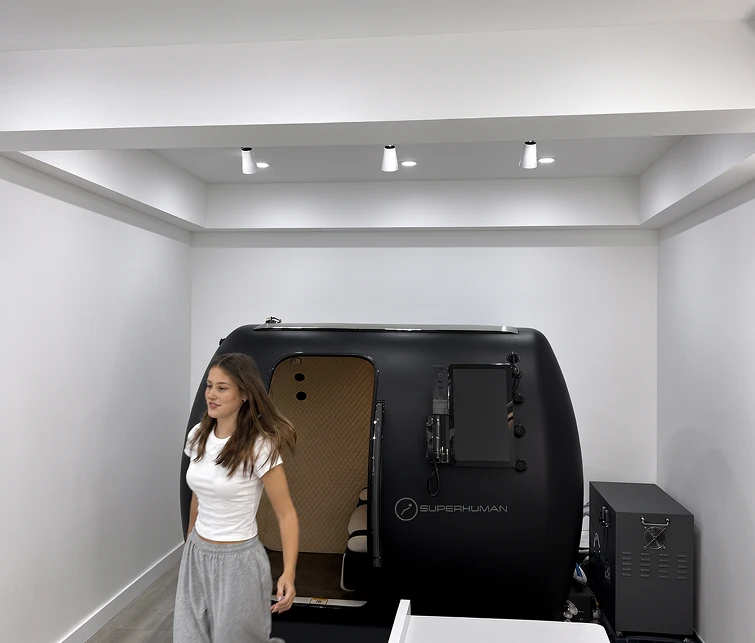
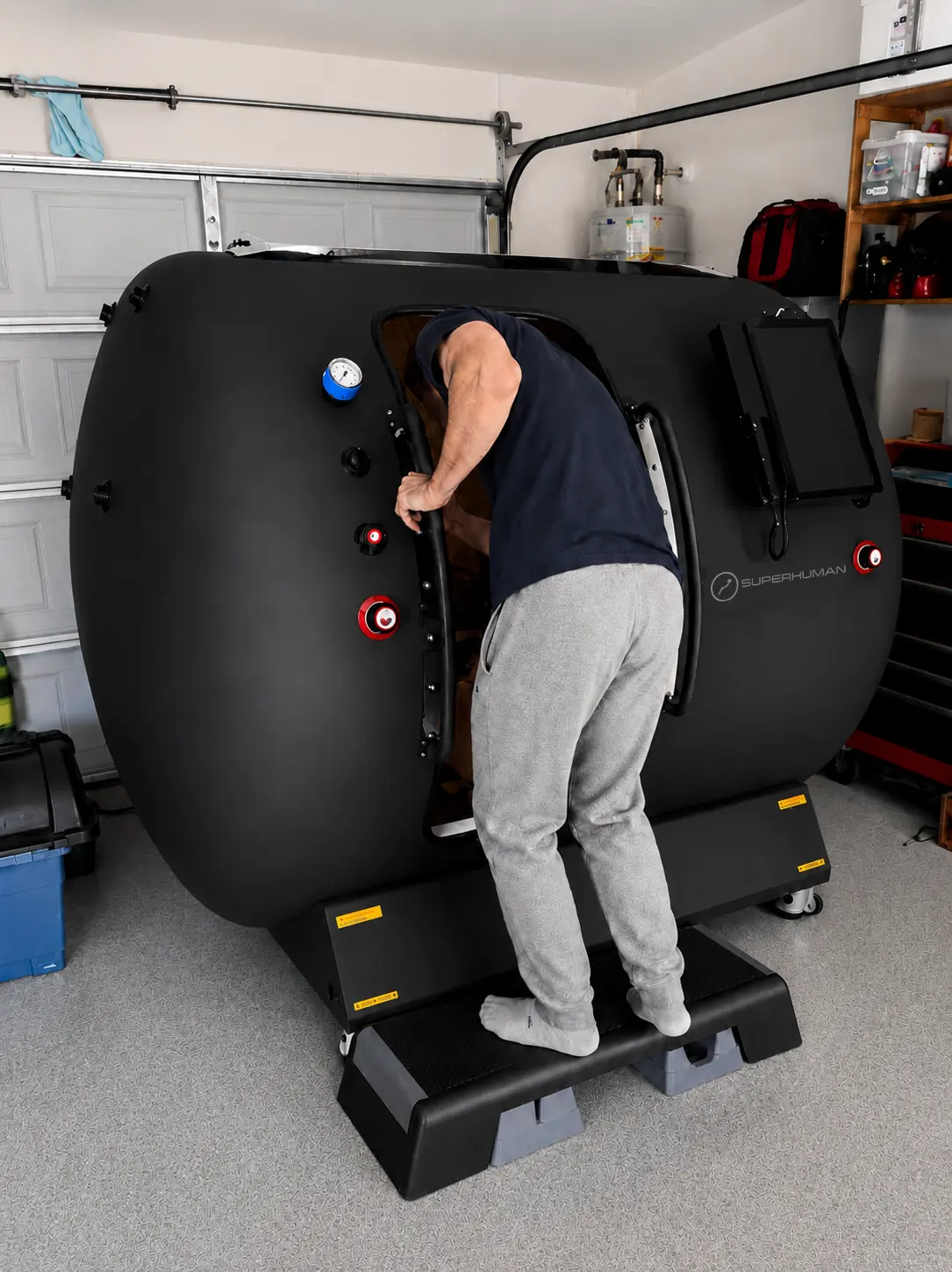
Every Superhuman hard-shell is air-pressurised with BIBS mask delivery, pressure-tested to ASME PVHO-1, and built in an ASME-certified factory, with the documentation to show for it. What changes between models is posture and capacity, not the safety architecture.
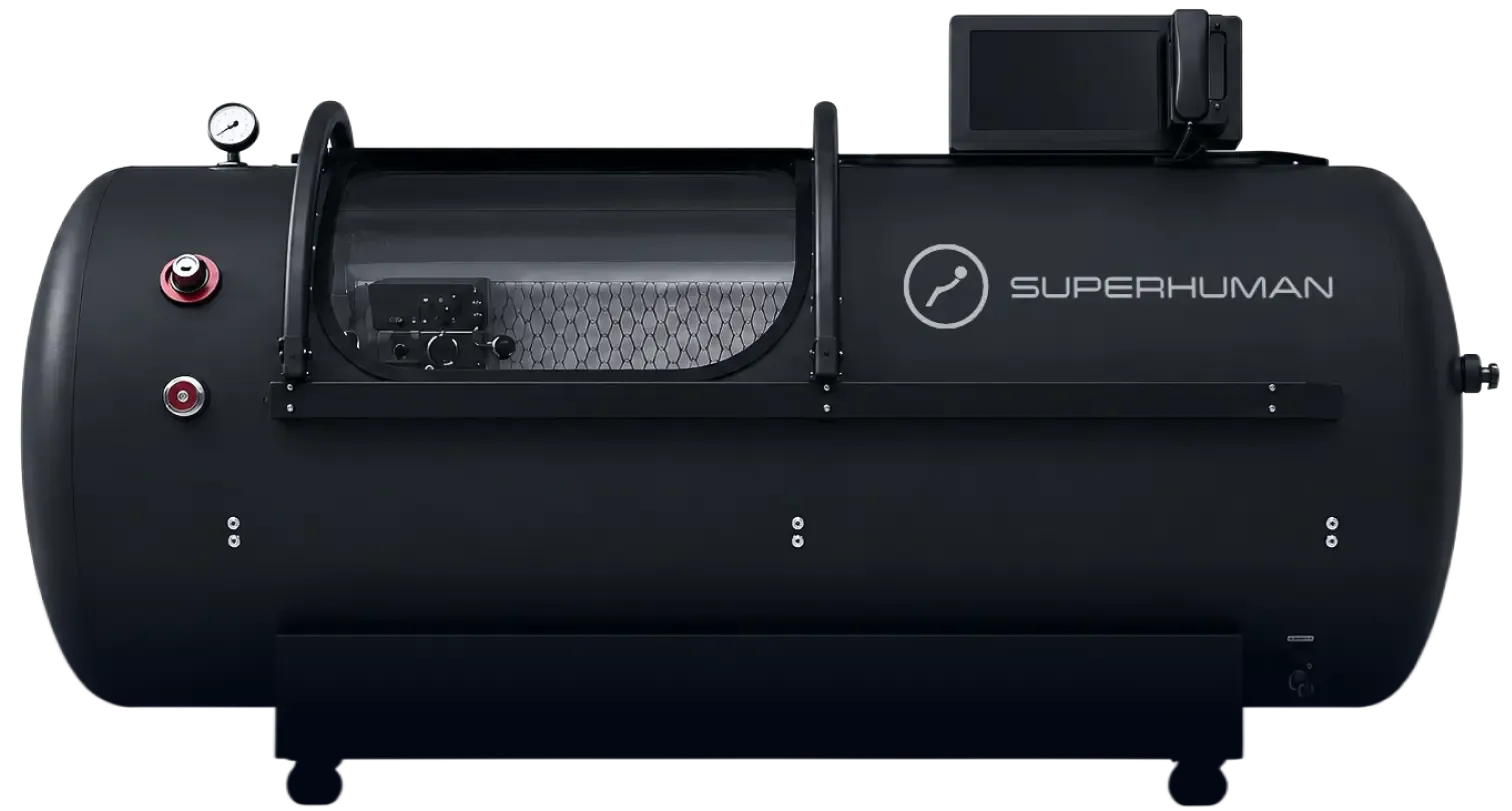

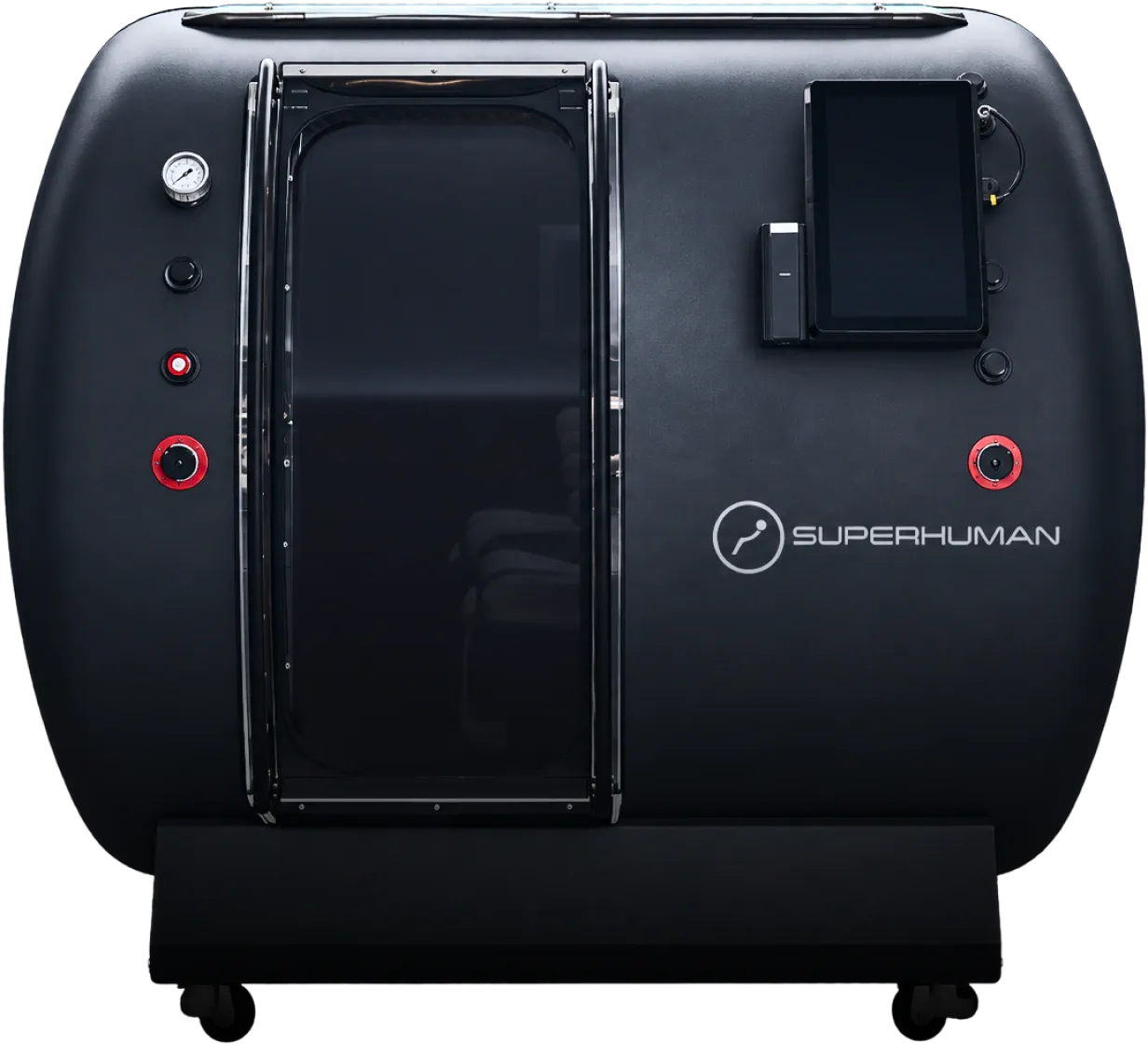
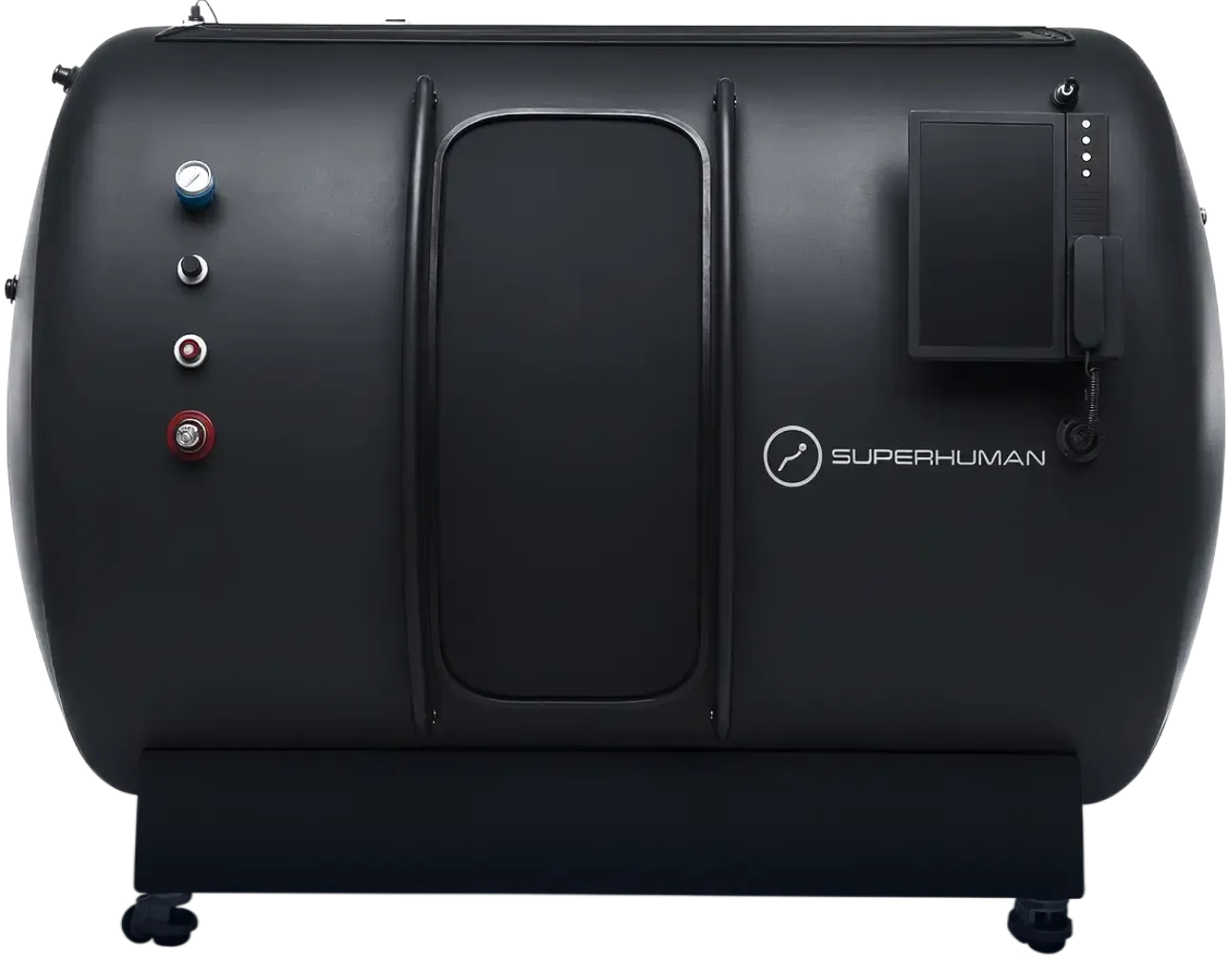
Considering a soft-shell instead? The soft-shell guide covers how the build classes differ, and when you're ready to buy a hyperbaric chamber, the full lineup compares every model side by side.
FAQ
Mayo Clinic describes hyperbaric oxygen therapy as generally safe, with most complications mild and serious complications rare. The largest published safety analysis, covering 2,334 patients, found an overall adverse-event incidence of 0.72% per session; 17.4% of patients experienced at least one adverse event across their full course of treatment, and the great majority of those were minor and temporary, led by ear pressure. Safety in practice is a property of the equipment and the protocol together: a chamber built to recognised pressure-vessel standards, operated under a materials and ignition protocol, with screening before treatment.
A hyperbaric chamber is a pressure vessel, and the recognised risk in hyperbaric medicine is fire rather than mechanical failure of a properly built and maintained vessel. Fire needs three things at once: fuel, oxygen, and an ignition source. A chamber concentrates oxygen by design and always contains some fuel, so certified practice attacks the third leg, eliminating ignition sources, and engineers the second, compressing with air rather than oxygen and venting continuously. Pressure-relief and over-pressure valves address the vessel side.
An ignition source meeting fuel in an oxygen-enriched environment. That is why certified operation bans flames, sparks, lighters, hand warmers, and unapproved electronics, uses indirect lighting only, and controls static electricity through 100% cotton garments and grounding. The FDA specifically notes that wool and synthetic fabrics generate more static than cotton and advises ensuring proper grounding equipment is used.
A home installation is workable, and the difference from a clinic is not the chamber but who holds the safety role. In a clinic a trained technologist runs screening, supervision, and the emergency procedure. At home that responsibility transfers to the owner, which is why training, a written emergency procedure, a prohibited-items habit, and a service schedule matter more, and why sessions should not be run alone. Speak to a physician before starting therapy at home.
Anything that adds fuel or an ignition source. That means no lighters or smoking materials, no hand warmers, no unapproved electronic devices, and no grease, oil, or petroleum-based products. Cosmetics and hairspray are prohibited. Paper and cloth are minimised, and occupants wear 100% cotton because wool and synthetics generate more static.
The common one is ear and sinus pressure during compression, the same sensation as an aircraft descent, reported across published series at rates spanning roughly 2% to 10% depending on the population and how it is counted. Temporary vision changes can occur over a long course and typically resolve. Oxygen toxicity is rare: an analysis of the same 2,334-patient cohort put seizure incidence at 0.011% of sessions, about one in 8,945. Our detailed side-effects and contraindications guide covers screening in full.
Johns Hopkins Medicine notes hyperbaric oxygen therapy is not safe for everyone. Untreated pneumothorax is the classic absolute contraindication, and certain lung conditions, some medications, recent ear surgery, and active upper-respiratory infection all warrant a clinician conversation first. Claustrophobia and fever also affect suitability. This is a screening question, not a self-assessment: clear it with a qualified physician before beginning.
The precise term is cleared, not approved. Hyperbaric chambers are regulated as Class II medical devices and reach the market through the FDA 510(k) clearance pathway under product code CBF, which is a different route from the premarket approval process used for higher-risk devices. Clearance is also use-specific, so the meaningful question about any chamber is what it was cleared for, not simply whether the letters FDA appear on the page.
Last updated: July 2026. This guide is educational and does not replace medical advice. Consult a qualified physician before starting hyperbaric oxygen therapy.
All-inclusive pricing
Elsewhere, getting a hard-shell chamber running means a stack of separate invoices. Here, it’s already in the price on the card.
No broker fee · no freight · no setup bill · no second invoice.
All-inclusive pricing
The S1 arrives ready to set up in minutes, with no install crew to pay for. The price covers everything around it.
No broker fee · no freight · no setup bill.