
The complete overview
Hyperbaric oxygen therapy, explained
Hyperbaric oxygen therapy (HBOT) means breathing 100% oxygen at 2 to 3 times normal air pressure inside a sealed chamber, so your blood carries far more oxygen to tissue that needs it. The FDA has cleared chambers for 13 conditions (the UHMS recognizes 15). This page covers how it works, what it treats, what a session is like, the difference between clinical and at-home chambers, and what it costs.
The definition
What is hyperbaric oxygen therapy?
Hyperbaric oxygen therapy is a medical treatment in which you breathe pure oxygen inside a pressurized chamber. Two things happen at once that ordinary breathing can’t reproduce.
The air around you is roughly 21% oxygen at one atmosphere of pressure (1 ATA). Inside a hyperbaric chamber you breathe close to 100% oxygen while the pressure is raised to 2 to 3 ATA, the equivalent of being 10 to 20 metres underwater. Mayo Clinic describes the goal simply: to get far more oxygen to tissue damaged by injury, infection, or disease (Mayo Clinic).
That combination of more oxygen and more pressure lets your lungs load the blood with several times the oxygen they could at sea level. The therapy goes by several names (HBOT, HBO therapy, or simply hyperbaric therapy), but they all describe the same physics. For the full physiology, the National Library of Medicine keeps a peer-reviewed overview.

How it works
How a hyperbaric chamber acts on the body
Every effect traces back to one mechanism: dissolving oxygen into the plasma under pressure, where it reaches places red blood cells alone cannot. Here is what that unlocks. The graded, evidence-by-evidence version is in our hyperbaric chamber benefits guide.
Approved uses
What hyperbaric oxygen therapy treats
The FDA has cleared 13 conditions and the Undersea & Hyperbaric Medical Society recognizes 15 where the evidence is strong enough for routine clinical use. These are administered under medical supervision.
- Carbon monoxide poisoning
- Decompression sickness (the bends)
- Air or gas embolism
- Non-healing wounds (e.g. diabetic foot ulcers)
- Gas gangrene & necrotizing soft-tissue infection
- Crush injury & acute traumatic ischemia
- Radiation tissue injury (delayed)
- Compromised skin grafts and flaps
- Chronic refractory osteomyelitis (bone infection)
- Severe anemia (when transfusion is not an option)
- Sudden sensorineural hearing loss
- Central retinal artery occlusion (sudden vision loss)
- Thermal burns (severe)
- Intracranial abscess
List follows the UHMS approved indications and the FDA. Separately, spas and clinics market HBOT for anti-aging, autism, COVID, stroke, and sports recovery: uses the FDA has not cleared. Some are under active research; none are settled. We grade those honestly in hyperbaric chamber benefits rather than lump them in here.
Two very different things
Clinical HBOT vs at-home hyperbaric therapy
“Hyperbaric oxygen therapy” covers two setups that medical pages rarely separate: the high-pressure treatment hospitals use for approved conditions, and the milder pressure people run at home for wellness. The pressure is the dividing line. See pressure levels explained.
| Clinical HBOT | At-home (mild HBOT) | |
|---|---|---|
| Pressure | 2.0 to 3.0 ATA | ~1.3 ATA (mild HBOT) |
| Oxygen | 100% O₂ via mask, hood or filled chamber | 90 to 95% O₂ from a concentrator, via mask |
| Setting | Hospital or accredited hyperbaric center | Home, on your own schedule |
| Used for | FDA-approved indications, under medical supervision | General wellness & recovery (evidence still emerging) |
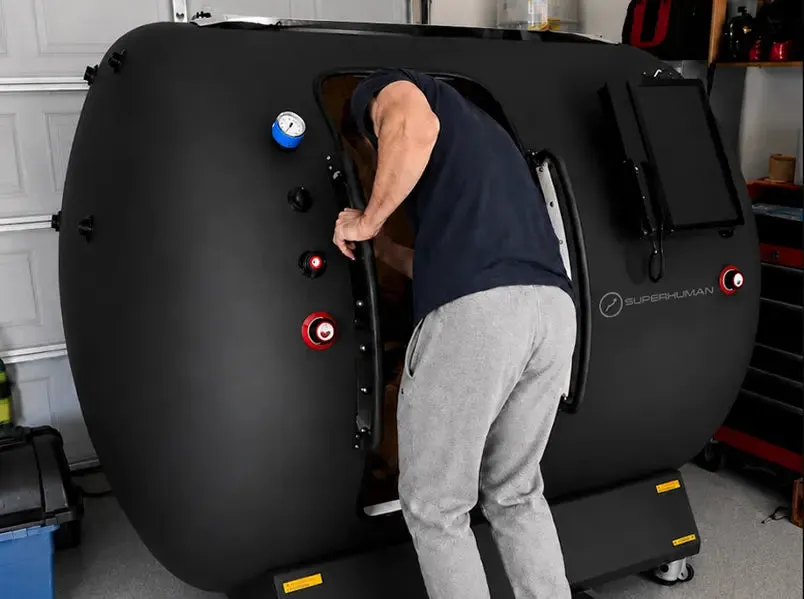
| Chamber | Hard-shell monoplace or multiplace | Soft-shell or compact hard-shell |
| Superhuman model | L1 / X: 2.0 ATA hard-shell | S1: 1.3 to 1.5 ATA soft-shell |
Neither is “better”; they answer different goals. Treating an FDA-approved condition needs clinical pressure under supervision; building HBOT into a wellness routine is what the home hyperbaric chamber and hard-shell vs soft-shell guides are for.
The hardware
Types of hyperbaric chambers
Clinically, chambers come in two formats, monoplace and multiplace, separated by how many people they hold and how the oxygen reaches you.
| Monoplace | Multiplace | |
|---|---|---|
| Holds | One person | Two or more, plus an attendant |
| How oxygen is given | The whole chamber fills with 100% oxygen | You breathe oxygen through a mask or hood; the room is air-pressurized |
| Looks like | A clear acrylic tube | A room you walk into |
| Typical setting | Most outpatient clinics and home units | Hospitals treating critical or multiple patients |
For buyers, the bigger split is hard-shell vs soft-shell and the ATA rating, which decide what pressure a chamber can reach. We compare real models in best hyperbaric chambers and across all hyperbaric chambers for sale.
Our range
Our chambers, by format
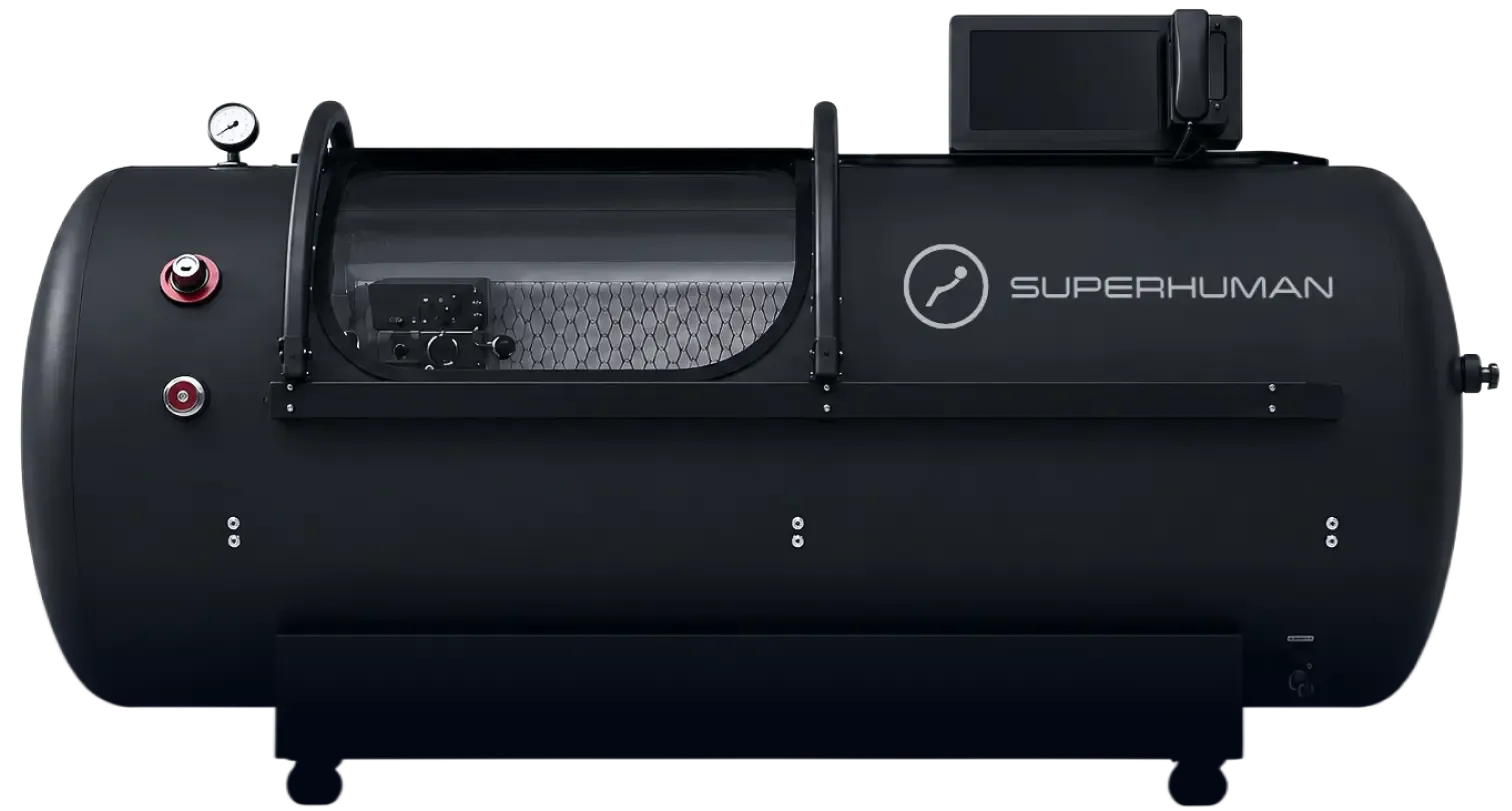
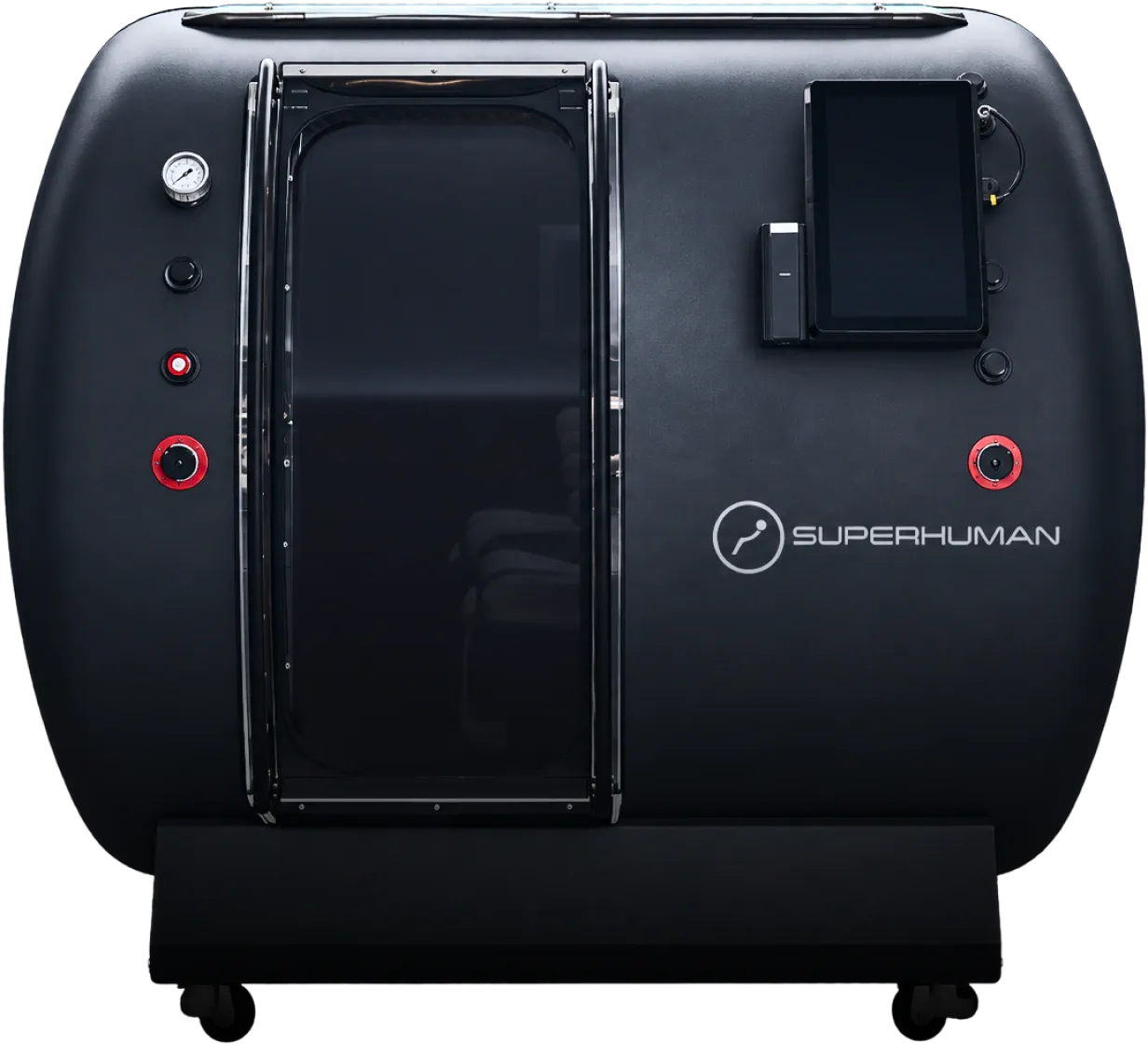
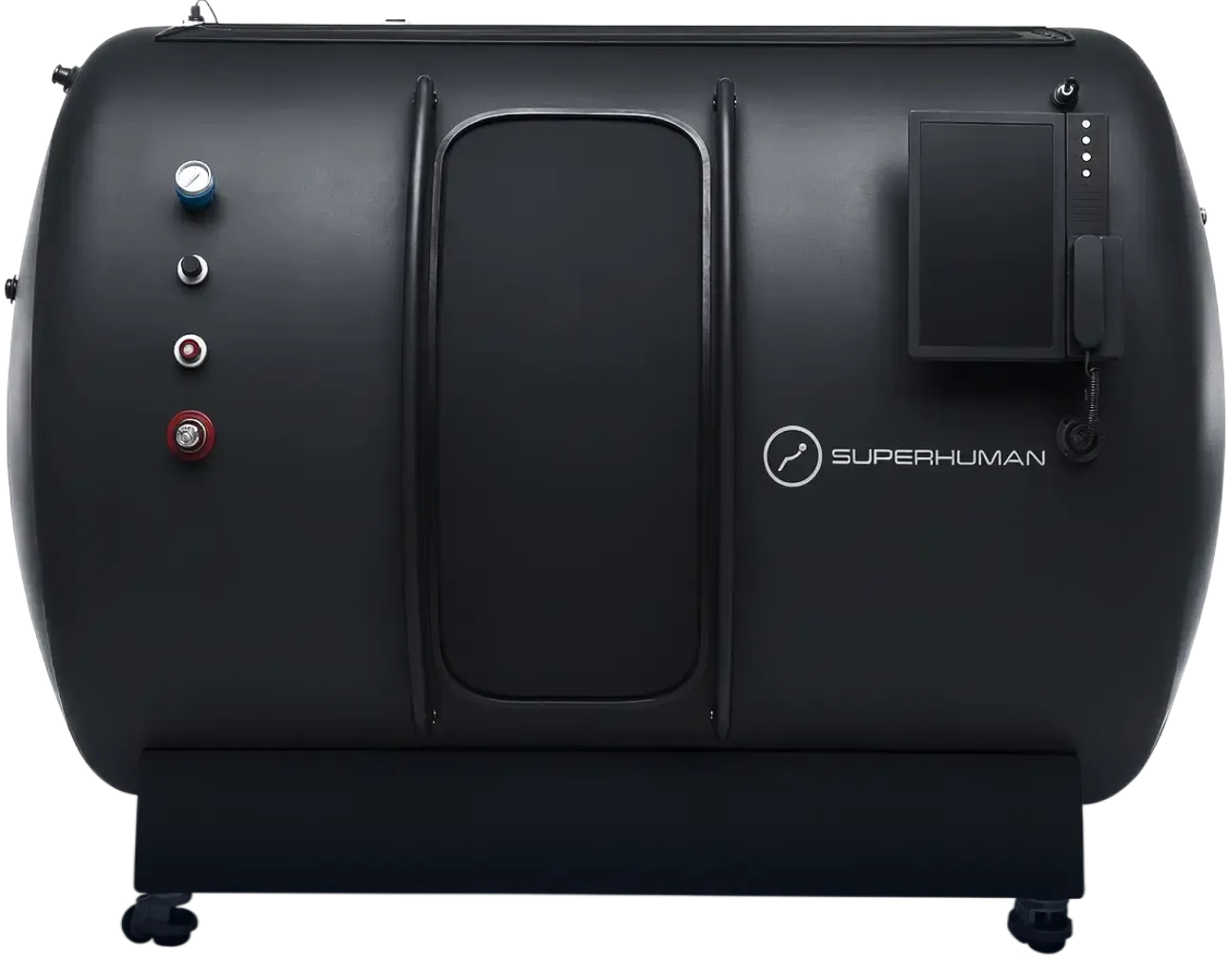
Our own range maps onto these formats, from a portable soft-shell to a four-person hard-shell, all rated to the pressures used in studied protocols.


What to expect
What a hyperbaric session is actually like
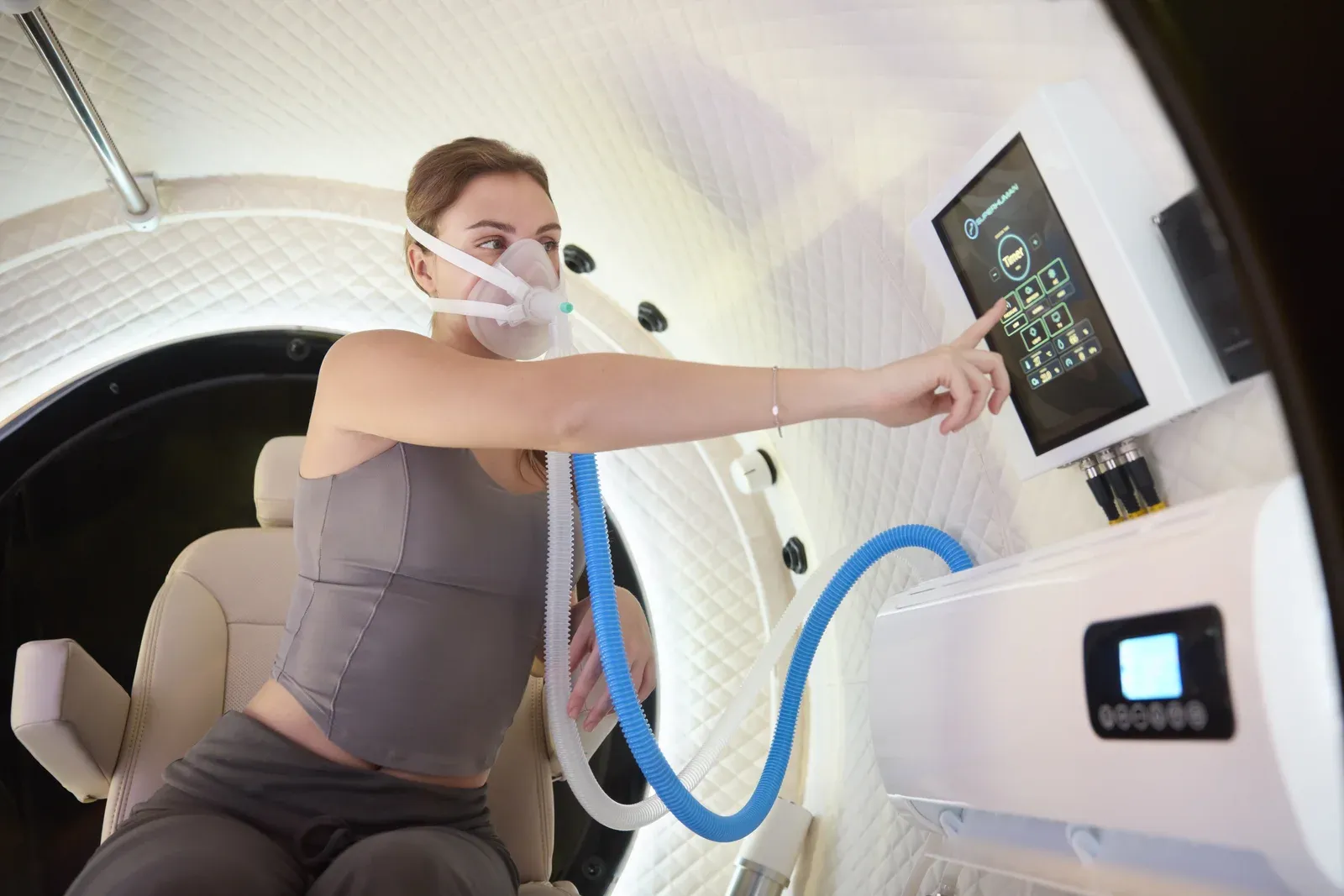
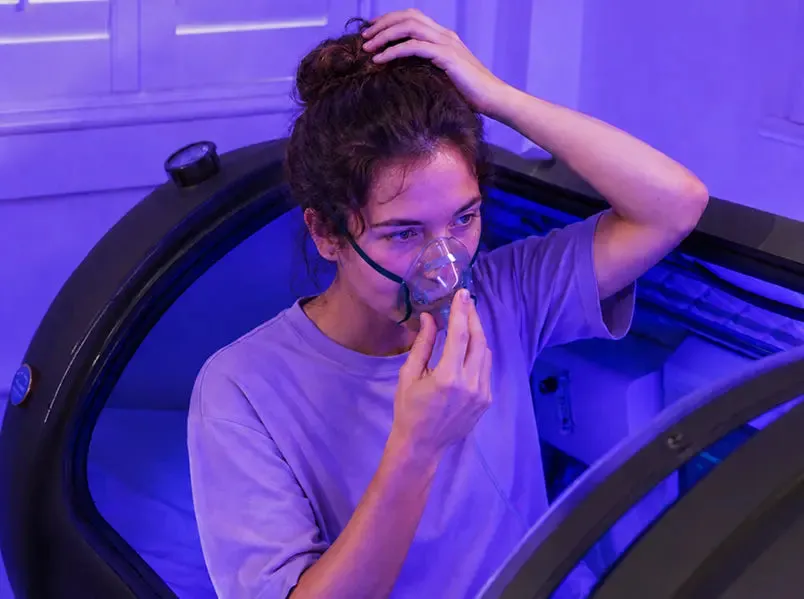
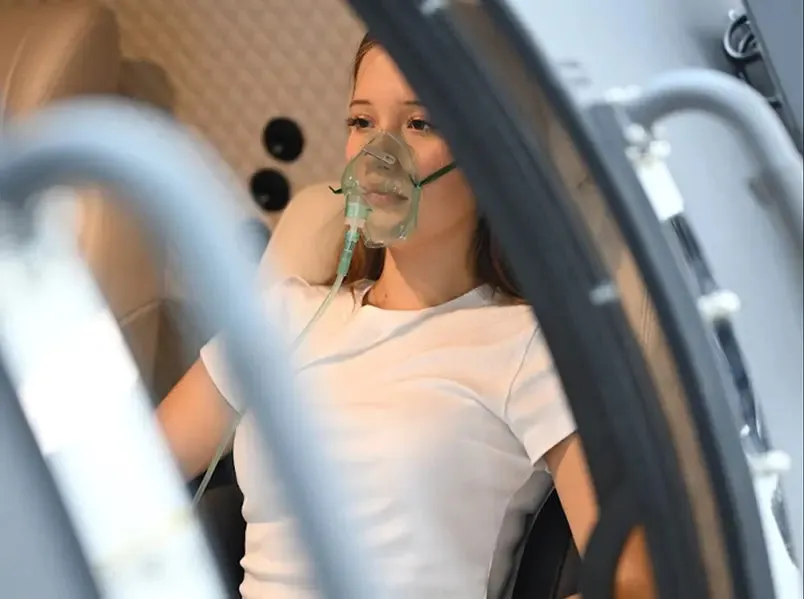
A single session usually lasts 90 minutes to 2 hours, and most protocols run 20 to 40 sessions, though an acute emergency such as carbon monoxide poisoning may need only one or two. You lie or sit in the chamber and breathe normally; many people sleep, watch a screen, or listen to music while the pressure does the work.
As the chamber pressurizes you’ll hear a faint hissing and feel your ears fill up, exactly like a plane descending. Swallowing, yawning, or chewing clears it. In a multiplace chamber, oxygen arrives through a mask or head tent, often in stretches separated by a five-minute “air break” to lower the small risk of oxygen toxicity. At the end, staff slowly release the pressure and your ears pop back as you breathe normally. A chamber you own runs the same way on your own schedule. Our hard-shell L1 steps through 1.3, 1.5, 1.7, and 2.0 ATA, with sessions up to 120 minutes. New to it? Read what to expect from your first HBOT session and how many sessions you actually need.
The part clinics skip
What does hyperbaric oxygen therapy cost?
The honest answer splits two ways: paying per session at a clinic, or owning a chamber outright. The math favours ownership faster than most people expect.
At a clinic, a single session is commonly billed from a few hundred to over a thousand dollars, and a 20 to 40 session protocol adds up quickly. Insurance covers it only for FDA-approved conditions. Wellness and longevity use is paid out of pocket. Owning a chamber spans from $15,000 for our foldable S1 soft-shell to $169,000 for the four-person T4 hard-shell, after which each session costs only a couple of dollars of electricity.
Because the break-even depends on your pressure, usage, and model, we built the numbers into two places: the hyperbaric chamber cost guide for the full breakdown and the cost calculator to run your own 5-year figure. When you’re ready to compare units, start with the chambers for sale.
FAQ
Common questions
What does a hyperbaric chamber do?
A hyperbaric chamber raises the air pressure around you to 2 to 3 times normal while you breathe oxygen. The pressure forces far more oxygen to dissolve into your blood plasma, which carries it deep into tissue that a poor blood supply has starved of oxygen. That oxygen boost is what drives wound healing, new blood-vessel growth, infection control, and reduced swelling.
How does hyperbaric oxygen therapy work?
Room air is about 21% oxygen at 1 ATA of pressure. Inside the chamber you breathe up to 100% oxygen at 2 to 3 ATA. Henry’s law means more gas dissolves into a liquid under higher pressure, so your plasma becomes supersaturated with oxygen and delivers it to areas normal circulation cannot reach. Over a course of sessions this stimulates angiogenesis, collagen production, and antibacterial activity.
What conditions is HBOT FDA-cleared for?
The FDA has cleared hyperbaric chambers for 13 conditions and the Undersea & Hyperbaric Medical Society recognizes 15, including carbon monoxide poisoning, decompression sickness, air or gas embolism, non-healing diabetic wounds, gas gangrene, crush injuries, radiation tissue injury, compromised skin grafts, chronic bone infection, severe anemia, and sudden hearing or vision loss. These are delivered under medical supervision at accredited facilities.
Can I do hyperbaric oxygen therapy at home?
Yes. Home chambers range from soft-shell units at 1.3 to 1.5 ATA (mild HBOT) to hard-shell chambers that reach the full 2.0 ATA used in most studied protocols. Home use suits general wellness, recovery, and performance rather than treating the FDA-recognized medical indications, which are delivered under medical supervision at accredited facilities. See our home hyperbaric chamber guide for what to expect.
How much does hyperbaric oxygen therapy cost?
It depends on whether you visit a clinic or own a chamber. Clinic sessions are commonly billed at several hundred to over a thousand dollars each, and a protocol can run 20 to 40 sessions. Owning a chamber ranges from $5,000–$25,000 for soft-shell units to $30,000–$200,000+ for hard-shell systems. Our hyperbaric chamber cost guide and cost calculator break the real numbers down.
How long is a session and how many do I need?
A single session usually lasts 90 minutes to 2 hours. The number depends entirely on the use: an acute emergency may need only one or two, while wound-healing protocols often run 20 to 40+ sessions, and wellness use is an ongoing routine. See how many HBOT sessions you actually need.
Is hyperbaric oxygen therapy safe?
For FDA-approved uses at an accredited facility, HBOT is considered safe, and side effects are usually mild and temporary: ear and sinus pressure are the most common. Rare complications include temporary short-sightedness, oxygen toxicity, and lung issues, and some people (for example, anyone with an untreated collapsed lung) should not use it. Read our full guide to HBOT side effects and contraindications.
Does insurance cover HBOT?
Medicare, Medicaid, and most insurers cover hyperbaric oxygen therapy when it treats an FDA-approved condition, though pre-authorization is often required. Coverage does not extend to wellness, anti-aging, or other off-label uses, which patients pay for out of pocket. Confirm with your plan before booking.
Last updated: June 2026. This guide is educational and does not replace medical advice. Consult a qualified physician before starting hyperbaric oxygen therapy.