
Sit up or lie down
Seated & vertical hyperbaric chambers
A seated (vertical) hyperbaric chamber pressurizes you upright in a chair instead of lying flat. The shape changes comfort, footprint, and entry, not the oxygen dose, which is set by pressure and oxygen level. And seated is not the same as low-pressure: our seated hard-shell reaches a true 2.0 ATA. Here is how the upright shape really compares to lying, and which fits you.
The shape decision
What seated & vertical actually means
Seated, vertical, upright, and sitting all describe the same thing: a chamber you use in a chair rather than lying down. It is one of three separate choices (shape, shell, and pressure) that people often blur together.
A hyperbaric chamber has three independent dimensions. Shape is whether you sit or lie down. Shell is whether the walls are a flexible soft-shell or a rigid hard-shell. Pressure is the ATA the chamber reaches. Seated is sometimes assumed to mean "soft and mild," but the shape is independent of the other two: you can find seated chambers in mild soft-shell builds and in 2.0 ATA hard-shell builds alike.
That distinction matters because the shape changes your experience (how it feels, how much room it needs, how you climb in) while the shell and pressure decide the therapy. Getting the two apart is the whole point of this guide: pick the posture you will be comfortable using, then choose the shell and pressure that match your goal. New to chambers entirely? Start with what a hyperbaric chamber is.
Side by side
Seated vs lying, compared
Neither shape is better therapy. Each trades off comfort, room fit, and access differently, and both deliver the identical oxygen dose at the same pressure and oxygen level.
| Seated / vertical | Lying / horizontal | |
|---|---|---|
| Posture | Upright in a chair | Flat / reclined |
| Footprint | Compact floor area, needs ceiling height | Longer floor run, low profile |
| Entry & exit | Step / sit in, door at seat height | Lie down, often floor-level or side entry |
| Feels | More open, aware of surroundings | More enclosed, relaxing / sleep-friendly |
| Multitasking | Read, watch, work while seated | Rest, nap, meditate |
| Oxygen dose | Set by pressure + oxygen, not posture | Set by pressure + oxygen, not posture |
The one row that never changes is the last one: at a given pressure and oxygen level, posture does not change the dose. What each pressure actually delivers is in our ATA pressure guide.
Why upright feels different
Comfort, claustrophobia & entry
The most common reason buyers choose seated is how it feels. Sitting upright keeps you aware of the room, adds legroom, and makes getting in and out simpler.
Lying flat inside an enclosed chamber can feel confining, and some people find it hard to settle or keep still for a full session. A seated chamber keeps you upright and, especially with large viewing windows, feels more open: a frequent reason people who experience claustrophobia prefer the vertical shape. It also frees you to read, watch something, or work during treatment, which makes a session, typically about 60 to 90 minutes (Cleveland Clinic), pass more easily. This is comfort and tolerance, not a medical claim; individual experience varies.
The upright shape also changes access. A seated chamber has a door at seat height, so you step or sit in rather than lowering to the floor and lying down. For anyone with back, hip, or knee pain, limited mobility, or a larger body, that upright entry is usually the easier one, one of the clearest practical advantages of the vertical design. Some seated models add an adjustable seat that reclines, so you can shift toward a more relaxed position without losing the easy entry.
Will it fit your room
Footprint: seated trades floor length for height
Seated trades floor length for height. A vertical chamber has a compact floor footprint but needs the ceiling height to stand upright. Measure both before you buy.
A seated chamber occupies a small floor area, which is why it fits tight home rooms and clinics working with limited square footage. The trade-off is vertical clearance: an upright chamber is tall, so the room needs the ceiling height to accommodate it and to leave headroom for entry. A lying chamber reverses the equation: it sits low but needs a longer, clear floor run to lie down and to open the door.
The practical planning step is the same either way: measure the floor space and the ceiling height of the room, then check the installed dimensions of the specific model, including the clearance to open the door and move around it. A compact footprint is worth little if the ceiling is too low for a vertical unit, or the floor too short for a horizontal one.
Shape isn’t shell or pressure
Are seated chambers soft or hard?
Both. Because shape is independent of shell and pressure, seated chambers exist across the whole range, from mild soft-shell to clinical-grade hard-shell.
| Build | Seated available? | Lying available? |
|---|---|---|
| Mild soft-shell (1.3–1.5 ATA) | Yes: upright soft chambers | Yes: portable lie-flat |
| Hard-shell (2.0 ATA) | Yes: seated hard-shell | Yes: lying hard-shell |
| Multi-person / clinic | Yes: seated multiplace | Less common |
So the shell and pressure are a separate choice from the chair. A soft-shell seated unit runs mild 1.3 to 1.5 ATA; a hard-shell seated unit like the Superhuman X reaches a true 2.0 ATA. Decide the shell in soft-shell vs hard-shell (or the deeper hard-shell vs soft-shell breakdown), and the pressure in the ATA guide, then come back to shape.
What it costs
What seated & vertical chambers cost
Price tracks shell, pressure, and seats, not whether you sit or lie down. A cheaper seated unit only holds within soft-shell.
Among mild soft-shell chambers, a compact seated unit can indeed cost less than a larger lying one, which is where the "seated is more affordable" idea comes from. But compare across the whole market and the chair is not what sets the price. A seated hard-shell at 2.0 ATA, like the Superhuman X at $110,000, costs more than a lying hard-shell entry such as the Superhuman L1 at $49,000. Same posture logic, very different price, because shell, pressure, and occupant count moved, not the seat.
Read cost the same way you read the chamber: separate the shape from the build. Size the real budget with our hyperbaric chamber cost guide and cost calculator, and if you are buying for the house, the home hyperbaric chamber guide covers placement and running costs.
Seated & lying, in our range
The Superhuman shape lineup
We build both. Here is every Superhuman chamber by shape, shell, pressure, and price, so you can see exactly where the seated and lying options sit.
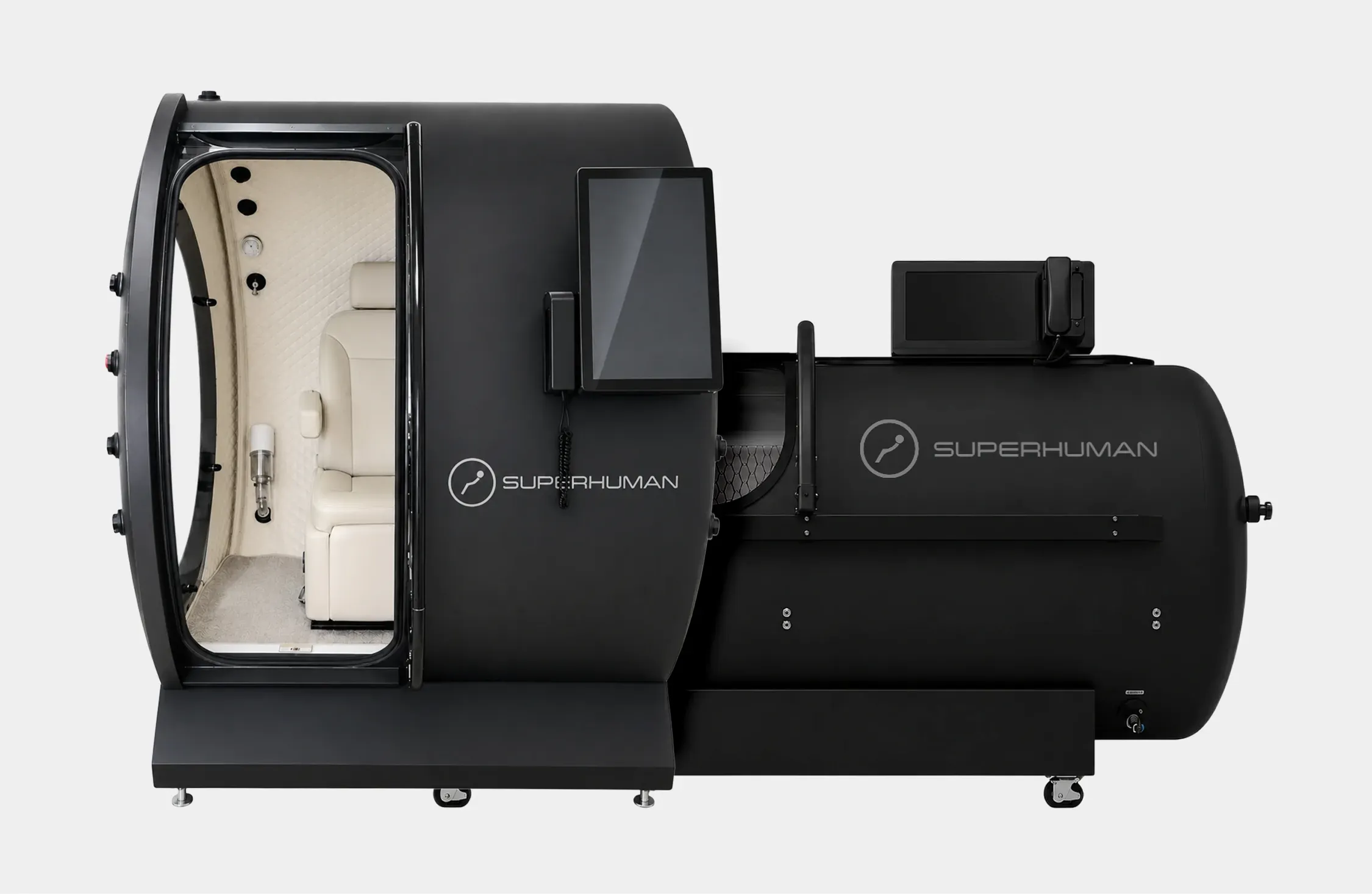
The Superhuman X is our single-person seated hard-shell; the T2 and T4 are seated multi-person chambers for clinics. Prefer to lie flat? The hard-shell L1 and the portable soft-shell S1 cover that. Compare them all in best hyperbaric chambers.
The decision
Who should choose seated, and who shouldn’t
Pick the shape by how you will use it, then lock in shell and pressure. Two questions settle most of it: how does lying flat feel to you, and what does your room allow?
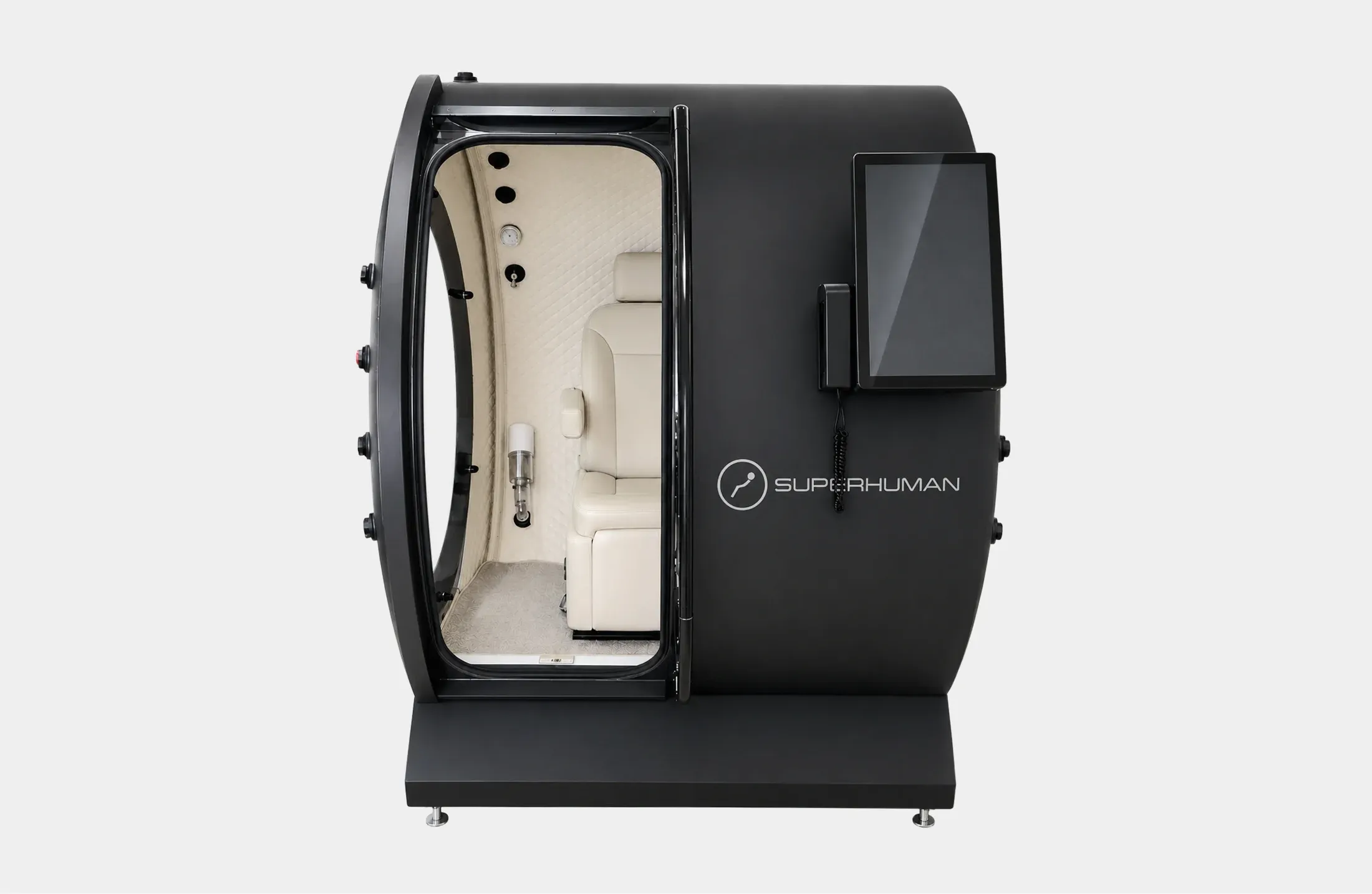
Upright, easy entry, compact footprint
- Lying flat feels confining, or you have claustrophobia
- Back, hip, or knee limits make lying and rising hard
- You want to read or work during a session
- Limited floor space, but adequate ceiling height
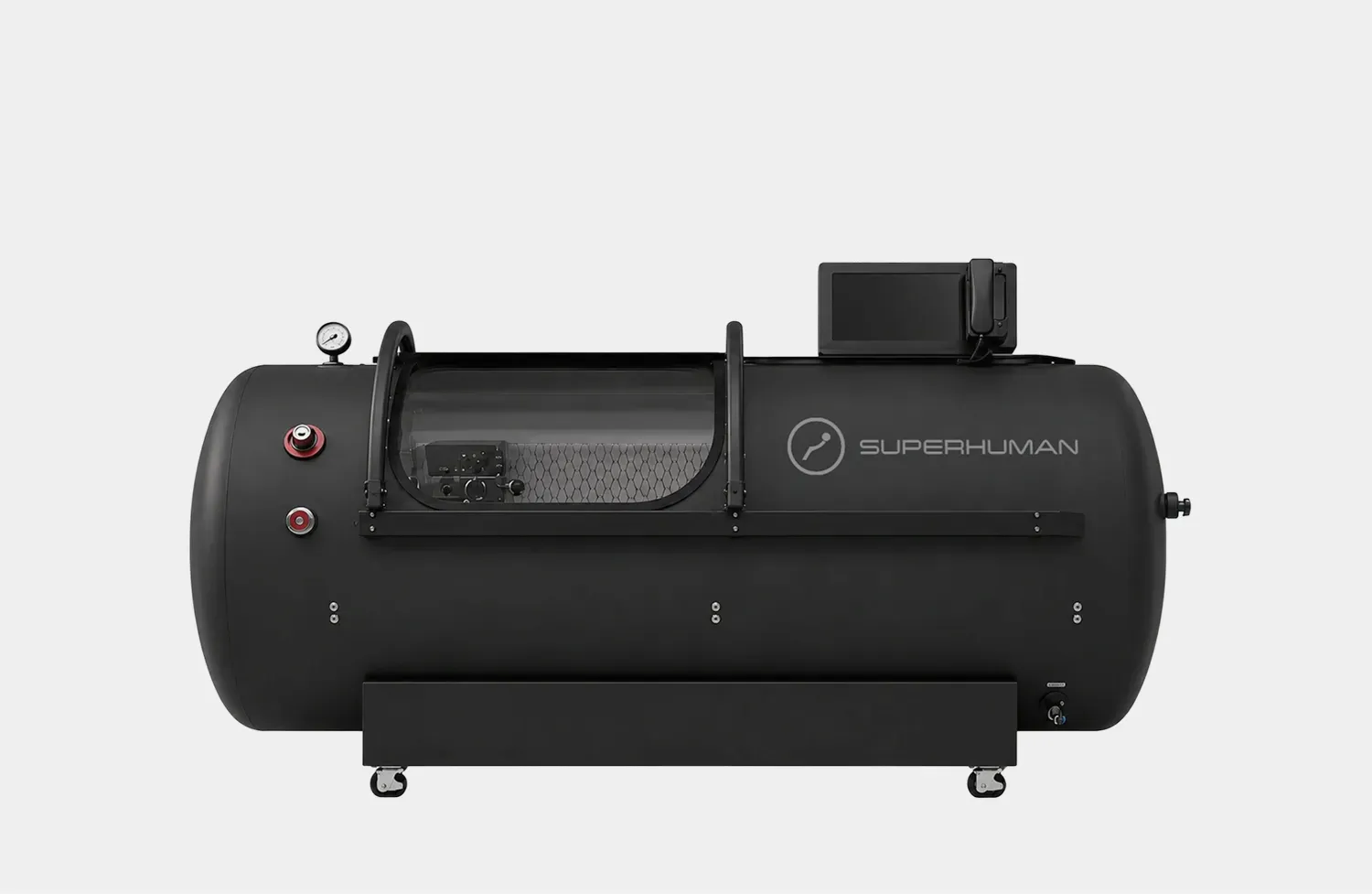
Lie flat, fully relax, low profile
- You want to nap or use sessions as downtime
- Low ceilings, but room to spread out on the floor
- You simply prefer being horizontal
- Budget, mild-HBOT option: the portable soft-shell S1
Choose seated / vertical if you feel confined lying down or experience claustrophobia, have back, hip, or knee limits that make lying and rising hard, want to read or work during sessions, have limited floor space but adequate ceiling height, or run a clinic that needs an easy-access, compact-footprint chamber. For a single-person, clinical-grade seated build, that points to the hard-shell Superhuman X at a true 2.0 ATA; for a clinic treating several people, the seated T2 or T4.
Choose lying / horizontal if you want to fully relax, nap, or use sessions as downtime, have low ceilings but room to spread out on the floor, or simply prefer being horizontal. A hard-shell L1 covers 2.0 ATA lying down, and the portable soft-shell S1 is the budget, mild-HBOT lie-flat option. When you have settled the shape, shell, and pressure, size the spend with the cost guide and browse chambers for sale.
FAQ
Seated & vertical questions
Can you sit up in a hyperbaric chamber?
Yes. Seated (also called vertical or upright) hyperbaric chambers are built around a chair instead of a bed, so you stay upright for the whole session. Many people find sitting easier for entry and exit and less confining than lying flat. Some models use an adjustable seat that reclines, letting you shift between sitting and a more relaxed position during treatment.
Are seated or vertical chambers as effective as lying ones?
The oxygen dose is set by the chamber’s pressure and the oxygen you breathe, not by whether you sit or lie down. A seated chamber and a lying chamber at the same pressure and oxygen level deliver the same therapeutic dose. Posture is a comfort, access, and space decision, not an efficacy one, so choose the shape you will actually use consistently.
Do seated chambers come in hard-shell or higher pressure?
Yes. Shape is independent of shell and pressure. Seated chambers exist as mild soft-shell units at 1.3 to 1.5 ATA and as rigid hard-shell units at a true 2.0 ATA; our seated hard-shell Superhuman X runs 2.0 ATA, the same clinical pressure as a lying hard-shell. A seated chamber isn’t automatically low-pressure, so check the ATA and the shell.
How do you get into a hyperbaric chamber?
It depends on the shape. Seated chambers have a door at seat height, so you step or sit in much like getting into a car. Lying chambers are entered by lying down, sometimes through a side or floor-level opening. For anyone with back pain, hip or knee limits, or reduced mobility, the upright entry of a seated chamber is usually the easier one.
Is a seated chamber better for claustrophobia?
Many people find it helps. Sitting upright keeps you aware of your surroundings, tends to offer more legroom, and (with large windows) feels more open than lying enclosed and horizontal. It is not a cure for claustrophobia, and comfort is individual, but the upright orientation is a common reason buyers choose seated over lying.
How long do you sit in a seated hyperbaric chamber?
A typical hyperbaric session runs about 60 to 90 minutes, whether you sit or lie down. Because seated sessions keep you upright and free to read or watch something, some users find the time passes more comfortably. Follow the session length your physician or protocol specifies rather than a fixed rule.
Does a seated chamber take up less space?
Usually less floor area, but it trades that for height. A seated chamber has a compact footprint that fits tight rooms and small clinics, while a lying chamber needs a longer floor run but sits lower. Before you buy, measure both the floor space and the ceiling height of the room, since a vertical chamber needs the clearance to stand upright.
Last updated: July 2026. This guide is educational and does not replace medical advice. Consult a qualified physician before starting hyperbaric oxygen therapy.