
Recovery & performance
The use case most home buyers start with: recovery between training blocks.
HBOT for athletic recovery: what the research says →Now accepting HSA/FSA on eligible orders
Learn moreBuying HBOT for the home
A home hyperbaric chamber puts HBOT where you actually use it: no booking, no commute, no clinic schedule. In 2026, increasingly it is not for a diagnosis. It is longevity-minded people making recovery a daily habit. This guide covers who buys a personal chamber and why, what premium buyers install, what it costs, and the practical reality of running one at home.
The 2026 buyer
Home HBOT used to be a clinical fallback. Now it is a deliberate choice by people optimizing for healthspan, and they buy for one reason above all: a chamber they own gets used.
The basics
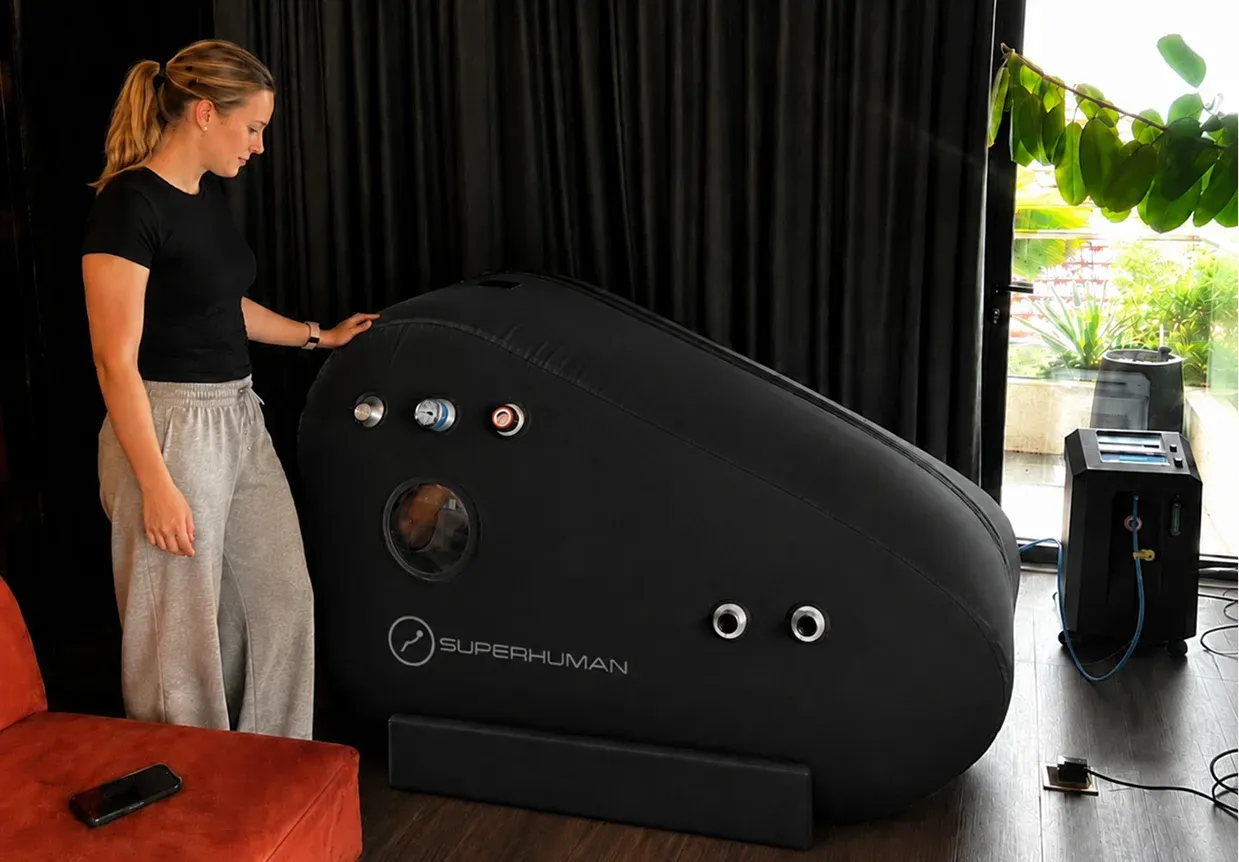
Hyperbaric oxygen therapy means breathing oxygen-enriched air inside a sealed chamber held above normal atmospheric pressure. The raised pressure drives more oxygen into the bloodstream and tissues than breathing at sea level can.
"Mild HBOT" refers to soft-shell chambers operating at 1.3 to 1.5 ATA; hard-shell chambers reach up to 2.0 ATA, the pressure used in most studied protocols. A home chamber delivers the same environment as a clinic for the pressure it is rated to. See pressure levels explained for how 1.3, 1.5, and 2.0 ATA differ.
The first decision
Almost every home buyer starts here. Soft-shell is the lowest-cost way into mild HBOT; hard-shell is the full-pressure, decades-long fixture. For the deep version, read our guide to hard-shell vs soft-shell chambers.
| Soft-shell (mild HBOT) | Hard-shell | |
|---|---|---|
| Max pressure | 1.3 to 1.5 ATA | Up to 2.0 ATA |
| Shell | Inflatable fabric | 304 stainless steel pressure vessel |
| Lifespan | ~5 to 10 years | 20 to 30+ years |
| Footprint | Packs away when deflated | A permanent fixture in the room |
| Home fit | Mild wellness, smallest budget | Full clinical pressure, lowest long-run cost per session |
| Superhuman model | S1: $15,000 | L1: $49,000 · T2: $125,000 |
The home line-up
Four Superhuman models suit a home: the foldable soft-shell S1, the lying-down L1, the seated X, and the two-person T2. (The four-person T4 is a commercial multiplace system.)
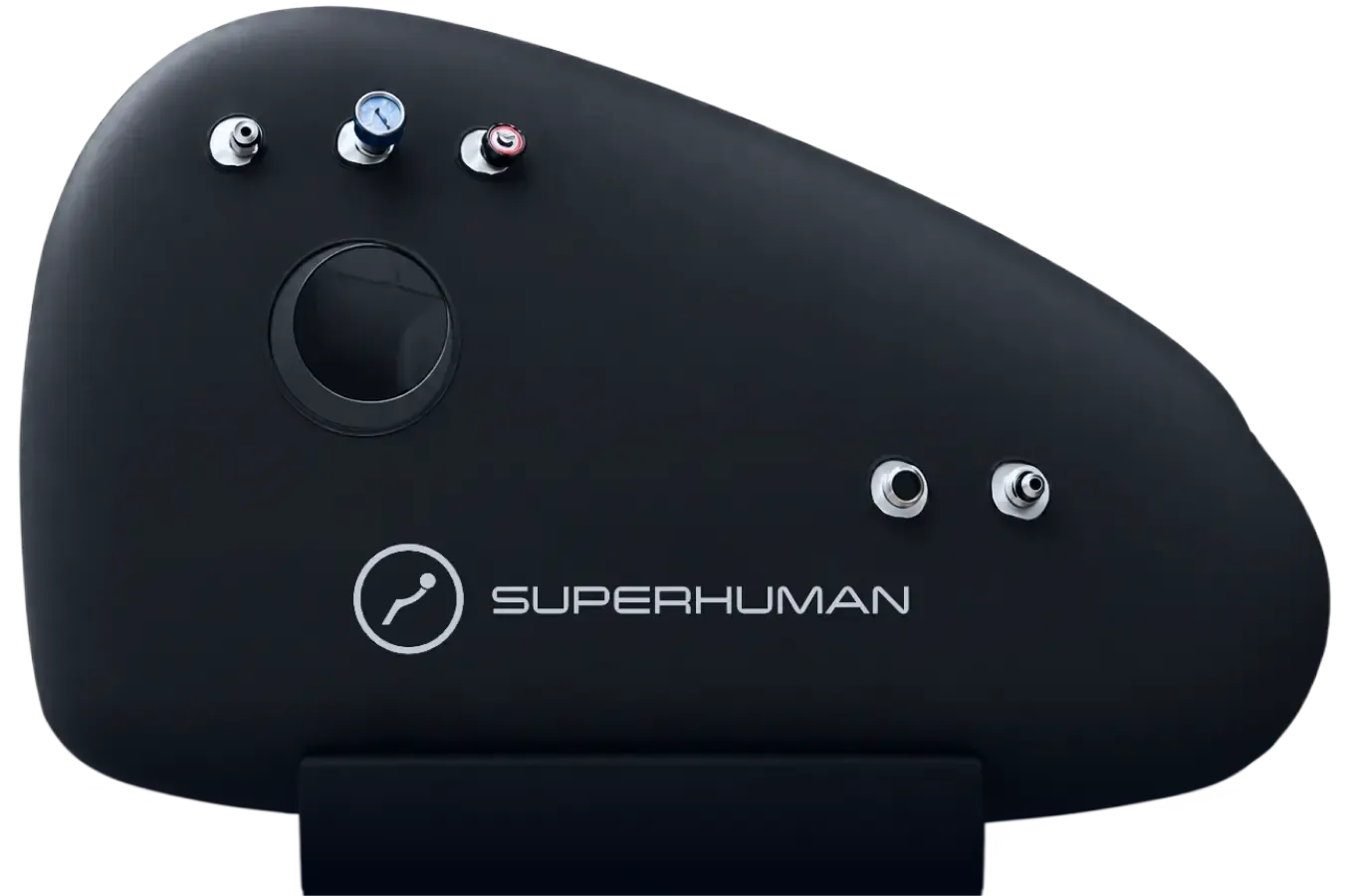
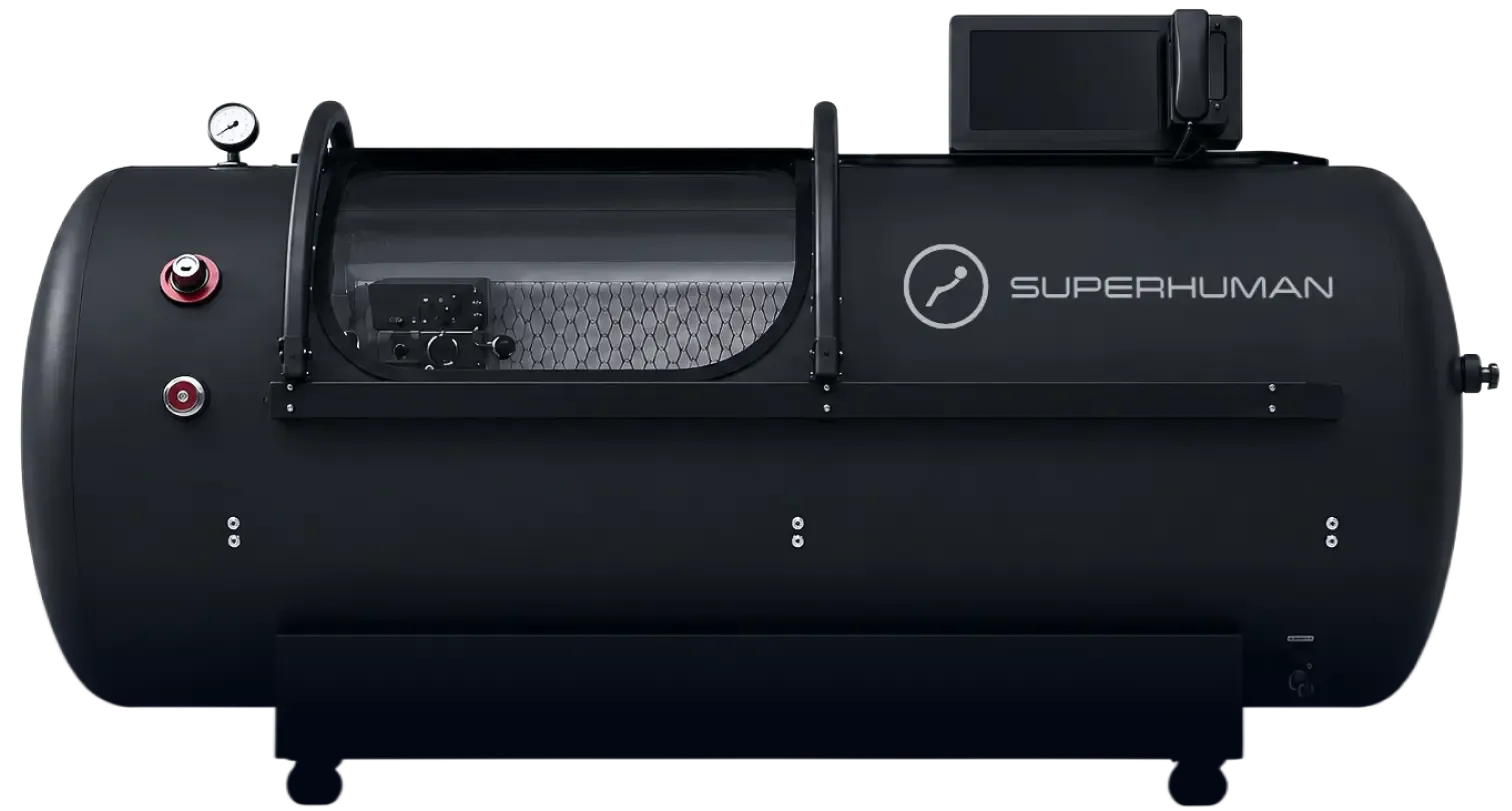

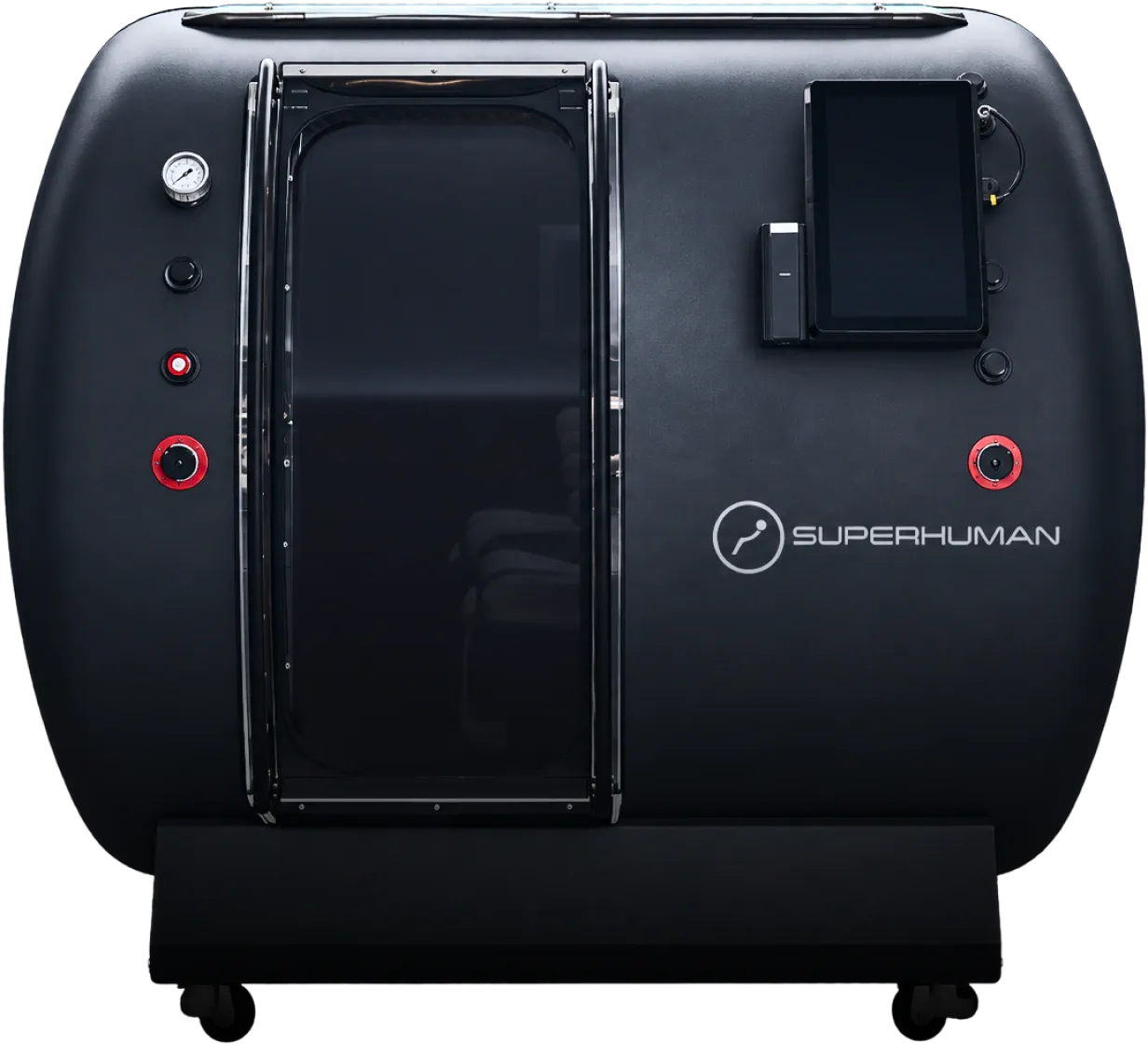
Compare all models side by side — five chambers from $15,000 to $169,000.
The money question
Home-appropriate models run from $15,000 (soft-shell S1) to $125,000 (two-person T2), with the most affordable full-pressure hard-shell, the lying-down L1, at $49,000. Delivery, installation, and training are included on every hard-shell, so there is no second invoice. Running cost is roughly $1.50 of electricity per session plus ~$200 to 300/yr in filters.
The case for owning is adherence and math: clinic sessions commonly run $100 to 250 each, so for anyone using HBOT several times a week, a chamber turns a recurring cost into a fixed one. See the full hyperbaric chamber cost guide for market ranges and the real five-year cost of ownership, or run your own numbers in the cost calculator.
The practical reality
The practical details worth knowing before you install one: space, power, oxygen, noise, and what it takes to keep a routine.
What you can’t see
A chamber you run yourself, without a technician on hand, has to be engineered for exactly that.
What to expect
We won’t make disease claims. What we will do is point you to the evidence behind the uses home buyers care about most, so you can decide for yourself.
The use case most home buyers start with: recovery between training blocks.
HBOT for athletic recovery: what the research says →A common reason people want daily access rather than weekly clinic visits.
Can HBOT improve sleep? →One of the most studied mechanisms behind HBOT’s reported effects.
HBOT for inflammation: the evidence →The peer-reviewed studies and clinical context behind hyperbaric therapy.
Read the research →FAQ
For most healthy users, yes. Daily sessions of about 60 to 90 minutes at home are common and are the main reason people buy rather than visit a clinic: the convenience is what makes a consistent routine possible. Start gradually, follow your chamber’s recommended pressure, and use it under appropriate medical guidance, especially if you have any pre-existing condition.
A home chamber delivers the same hyperbaric environment as a clinic for the pressure it is rated to. A soft-shell reaches 1.3 to 1.5 ATA (mild HBOT); a hard-shell reaches up to 2.0 ATA, the pressure used in most studied protocols. The bigger real-world difference is adherence: people who own a chamber simply do far more sessions than people who book them.
Soft-shell (from $15,000) is the lowest-cost entry into mild HBOT at 1.3 to 1.5 ATA and can be stored away. Hard-shell (from $49,000) reaches the full 2.0 ATA, lasts 20 to 30+ years, and has the lowest long-run cost per session, but it is a permanent fixture. See our full breakdown in the guide to hard-shell vs soft-shell chambers.
A hard-shell chamber is planned into a room like a piece of furniture; a soft-shell can be deflated and stored. Both run from a standard household outlet along with an oxygen concentrator. No plumbing, special circuits, or construction. We map clearances and electrical needs with you before delivery.
Home-appropriate Superhuman models run from $15,000 for the foldable soft-shell S1 to $125,000 for the two-person T2; the most affordable full-pressure hard-shell is the lying-down L1 at $49,000. For market ranges, the real five-year cost of ownership, and a calculator, see our hyperbaric chamber cost guide.
For frequent users, usually yes. Clinic sessions commonly run $100 to 250 each, so a daily habit adds up quickly. Owning converts that recurring cost into a fixed one: the more you use it, the lower your effective cost per session. Our cost calculator shows the crossover for your own usage.
HBOT is not appropriate for everyone: certain ear, lung, and other conditions are contraindications, and you should consult a physician before starting. We cover this in detail in our guide to HBOT side effects and contraindications.
A properly engineered chamber is designed for it. Superhuman hard-shells are certified pressure vessels (304 stainless, pressure-tested to PVHO-1 standards, quadruple-redundant valves) and are air-pressurized with oxygen delivered by mask, which avoids the pure-oxygen fire risk that makes some chambers unsuitable for the home.
Wellness and performance use of mild and hard-shell chambers is generally purchased directly. Clinic-administered HBOT for FDA-cleared medical indications is a separate, prescription-based pathway. Use any chamber under appropriate medical supervision.
Most home users settle into 3 to 5 sessions a week, and many do daily blocks. Responses vary by person and goal; consistency over weeks matters more than any single session. See our guide on how many HBOT sessions you need and what to expect from your first session.

All-inclusive pricing
Elsewhere, getting a hard-shell chamber running means a stack of separate invoices. Here, it’s already in the price on the card.
No broker fee · no freight · no setup bill · no second invoice.
All-inclusive pricing
The S1 arrives ready to set up in minutes, with no install crew to pay for. The price covers everything around it.
No broker fee · no freight · no setup bill.