
Mild HBOT, decoded
Soft-shell hyperbaric chambers
A soft-shell hyperbaric chamber is a zipper-sealed fabric chamber that runs 1.3 to 1.5 ATA, the pressure range known as mild HBOT. It costs $5,000 to $20,000 against $25,000-plus for a hard-shell, which is why most home and wellness buyers start here. We install both types, so here is the honest line: what a soft chamber genuinely delivers, when it is enough, and when it is not.
The object
What a soft-shell chamber is
A soft-shell chamber is a flexible, airtight enclosure that a compressor inflates to a mild pressure. The same object goes by several names (mild, mHBOT, portable, inflatable), all describing one low-pressure chamber, as opposed to a rigid hard-shell.
| Part | What it does |
|---|---|
| Shell | Flexible TPU or reinforced nylon/PVC, sealed with an airtight zipper |
| Compressor | Pumps filtered ambient air in to raise internal pressure to 1.3–1.5 ATA |
| Oxygen concentrator | Optional add-on feeding ~90–95% oxygen through a mask inside |
| Relief valve | Vents air and CO₂ to hold pressure stable and safe |
| Window | Clear port for visibility and to reduce claustrophobia |
Soft chambers descend from the portable bags built to treat altitude sickness in climbers and divers, which is why they are lightweight, deflate for storage, and set up in minutes with only a power outlet. Plan for one practical trade-off: the compressor runs for the whole session, so it is audible in the room. New to chambers entirely? Start with what a hyperbaric chamber is, or see the full pressure ladder in our ATA pressure guide.
What 1.3–1.5 ATA delivers
The number that actually matters
At 1.3 ATA a soft chamber holds about 30% more pressure than sea level, roughly the equivalent of being 10 feet underwater. Whether that does much depends entirely on what you breathe inside it.
Breathing plain room air at 1.3 ATA works out, by the gas-law math, to roughly 27% oxygen at sea level, a modest lift (Caroline Fife, M.D.). The meaningful gain in a soft chamber comes from adding an oxygen concentrator, which feeds around 90 to 95% oxygen through a mask and pushes far more oxygen into your blood plasma. A soft chamber without a concentrator is doing very little.
| Setting | Oxygen · pressure | Inspired O₂ pressure |
|---|---|---|
| Room air, sea level | 21% O₂ · 1.0 ATA | ≈ 160 mmHg |
| Soft chamber, air only | 21% O₂ · 1.3 ATA | ≈ 207 mmHg |
| Soft chamber + concentrator | ~90% O₂ · 1.3 ATA | ≈ 889 mmHg |
| Oxygen mask (ambulance) | 55% O₂ · 1.0 ATA | ≈ 418 mmHg |
| Hard chamber, clinical | 100% O₂ · 2.4 ATA | ≈ 1,824 mmHg |
The takeaway is not "soft is useless." It is that pressure and oxygen source work together. A mild chamber with a concentrator lands well above room air; a clinical hard-shell at 2.0 ATA on 100% oxygen lands far higher again. The full gas-law walkthrough is in our ATA pressure guide.
Side by side
Soft-shell vs hard-shell
The two chamber types answer different needs. A soft-shell trades peak pressure for portability, comfort, and a fraction of the price; a hard-shell trades those for clinical pressure and 100% oxygen.
Neither wins outright; they fit different goals and budgets. For a model-by-model breakdown across both types, see best hyperbaric chambers, and for the deeper build comparison, hard-shell vs soft-shell.
What people use it for
Where mild HBOT fits, and where it doesn’t
Soft chambers live in the wellness lane: everyday recovery and oxygenation you can do at home. That is a real use, as long as the claims stay honest.
People choose mild HBOT for workout and injury recovery, fatigue, sleep support, general oxygenation, and travel or altitude. The appeal is frequency: a chamber comfortable enough to use five days a week at home does more in practice than a stronger one you rarely climb into. Most published HBOT research runs at 1.5 ATA and above, and evidence for the milder wellness uses is still emerging; we grade what the studies actually show in our benefits guide and hyperbaric oxygen therapy overview.
The honest limit: diagnosed medical conditions are not a soft-shell job. Non-healing wounds, radiation injury, carbon monoxide poisoning, and the other FDA-recognized indications are studied and treated with clinical HBOT at 2.0 ATA or higher on 100% oxygen, under supervision (UHMS). A mild chamber supports wellness; it does not replace a prescription.
Read before you buy
FDA status and safety
The FDA clears soft-shell chambers for acute mountain sickness only, and the real hazards are uncertified imports and unattended use, not the mild pressure itself. Knowing the regulatory line and a few build red flags protects you from the units that give the category a bad name.
The FDA clears soft-shell chambers for acute mountain sickness only; every other use is off-label (FDA). The Undersea & Hyperbaric Medical Society has issued a consumer warning about uncertified soft-sided "bag" chambers (many imported without FDA registration or the ASME PVHO-1 pressure-vessel standard), and Health Canada has banned unlicensed units outright (UHMS). The most serious documented incidents involved unattended home use. None of this makes a well-built, properly used soft chamber dangerous; it makes buying from a credible source and never using one alone non-negotiable.
One genuine safety advantage cuts the other way: because oxygen toxicity is driven by the pressure and duration of oxygen exposure, a soft chamber running mild pressure on ambient air rather than 100% oxygen carries very low toxicity risk and needs no scheduled oxygen breaks. The real hazards are build quality and unattended operation, not the pressure itself.
Before you buy a soft-shell chamber, confirm:
- The manufacturer is registered with the FDA and names the model’s clearance.
- The build follows the ASME PVHO-1 pressure-vessel standard (ask for documentation).
- The chamber uses certified breathing air, never a raw oxygen fill of the whole bag.
- An oxygen concentrator (if included) feeds a mask, not the chamber interior.
- The unit ships with pressure-relief valves and a working gauge.
- The seller specifies attended use: never operate a chamber alone.
- There is a real warranty and a US-based support contact, not just an overseas listing.
The money
What a soft-shell chamber costs
Soft-shell chambers run roughly $5,000 to $20,000, a fraction of a hard-shell’s $25,000-plus. Where a given unit lands inside that band comes down to a few things.
Price climbs with pressure ceiling (1.5 ATA units cost more than 1.3 ATA), size and shape (larger, seated, or easy-entry designs), whether an oxygen concentrator is included, and build quality. Running cost is modest (electricity for the compressor plus periodic filter and zipper upkeep), but it is real over years of daily use, and worth modeling before you buy.
To size the full picture, use our hyperbaric chamber cost guide and the cost calculator, which compares purchase, operating, and five-year totals across chamber types so you are comparing lifetime cost, not just sticker price.
The decision
Soft or hard: which should you buy?
Work backward from your goal, not the spec sheet. Two questions settle it: what are you using it for, and does anyone need a clinical protocol?
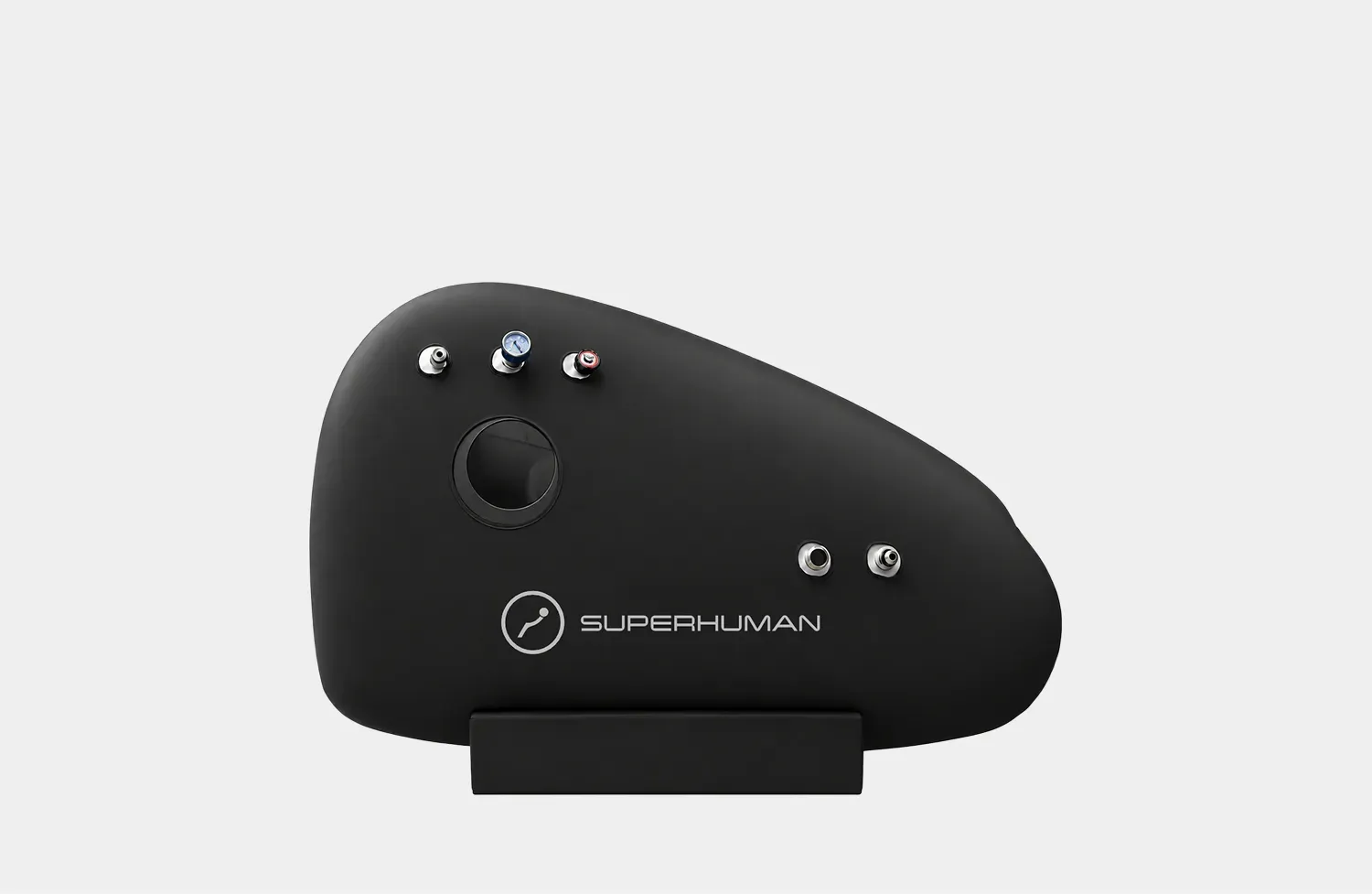
Wellness, recovery, home use
- Your goals are recovery, wellness, sleep, or travel
- Budget is under $20,000
- You want portability and easy daily use
- You’re trying HBOT before a bigger commitment
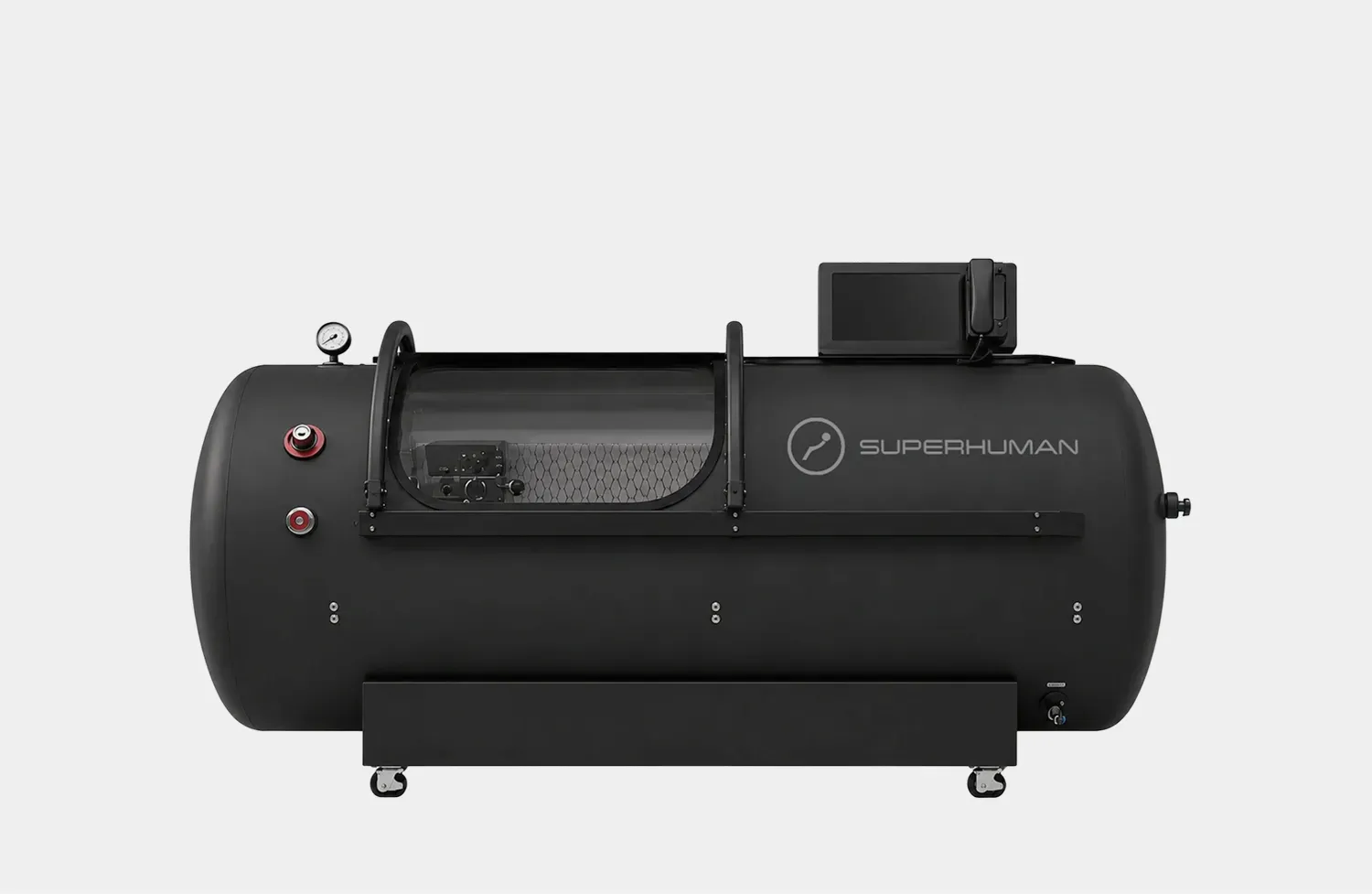
Clinical protocols, clinic revenue
- A physician prescribed clinical HBOT
- You need a true 2.0 ATA protocol on 100% oxygen
- You’re running a clinic where indications matter
- Resale value and FDA recognition are priorities
Buy a soft-shell if your goals are wellness and recovery, your budget is under $20,000, you want portability, or you are trying HBOT for the first time before committing to a bigger system. That lane is exactly what our Superhuman S1 ($15,000, 1.3–1.5 ATA) is built for. Pair it with a concentrator and you have a capable, home-friendly setup you will actually use. If you are buying for the house specifically, the home hyperbaric chamber guide covers placement, power, and space.
Buy a hard-shell if a physician has prescribed clinical HBOT, you need a true 2.0 ATA protocol on 100% oxygen, or you are running a clinic where resale value and FDA-recognized indications matter. The hard-shell chamber guide covers that side in full. When you are ready to see real models, browse hyperbaric chambers for sale, where the Superhuman L1 ($49,000) is the entry point to a true 2.0 ATA hard-shell, or compare the lineup in best hyperbaric chambers.
FAQ
Soft-shell questions
Is a soft-shell hyperbaric chamber effective?
For wellness and recovery goals (everyday oxygenation, workout recovery, sleep support, travel), a soft-shell chamber at 1.3 to 1.5 ATA paired with an oxygen concentrator delivers a meaningful oxygen lift and is easy to use daily. For diagnosed medical conditions such as non-healing wounds, radiation injury, or carbon monoxide poisoning, it is not a substitute for clinical HBOT, which is studied at 2.0 ATA and above with 100% oxygen under medical supervision.
Can you use 100% oxygen in a soft-shell chamber?
No. You should never flood a fabric soft-shell chamber with 100% oxygen. That creates a serious fire risk and falls outside how these chambers are designed and cleared. Soft chambers are pressurized with filtered ambient air; the added oxygen comes from a concentrator delivering roughly 90 to 95% through a mask you wear inside, not by filling the whole bag.
What is the difference between soft-shell, mild, and portable hyperbaric chambers?
They are three names for the same category. "Soft-shell" describes the flexible fabric build, "mild HBOT" (or mHBOT) describes the 1.3 to 1.5 ATA pressure range, and "portable" or "inflatable" describes how it deflates and moves. Any one of those terms points to the same low-pressure, zipper-sealed chamber, as distinct from a rigid hard-shell chamber.
How long is a session in a soft-shell chamber?
A typical mild HBOT session runs 60 to 90 minutes. Pressurizing and depressurizing take a few minutes at each end, and the pressure change feels like the ear-popping of an airplane ascent or descent. Many users run sessions several times a week; because the pressure is mild and the chamber is not flooded with pure oxygen, sessions do not require the scheduled oxygen breaks used in clinical HBOT.
Are soft-shell hyperbaric chambers FDA approved?
Soft-shell chambers are FDA-cleared only for treating acute mountain sickness, the original purpose of the portable "Gamow bag" they descend from. Any other use is off-label. Hard-shell chambers are regulated as Class II devices; the FDA has cleared them for 13 conditions and the UHMS recognizes 15. Always read a soft chamber’s actual clearance rather than a marketing claim, and consult a physician before starting therapy.
How long does a soft-shell chamber last?
A well-built TPU or reinforced-nylon chamber used at home typically lasts many years; the zipper seal and compressor filters are the wear items, and the flexible material slowly fatigues through pressure cycles. Longevity depends on build quality, how often you use it, and upkeep. Confirm the warranty length and whether replacement parts and support are available before buying.
Last updated: July 2026. This guide is educational and does not replace medical advice. Consult a qualified physician before starting hyperbaric oxygen therapy.